Foreign Influence Pervades Sudan’s Al-Fashir Turmoil
The takeover of el-Fasher by RSF forces in Sudan, compounded by the involvement of foreign nations, has exacerbated the already intricate crisis facing the African nation.
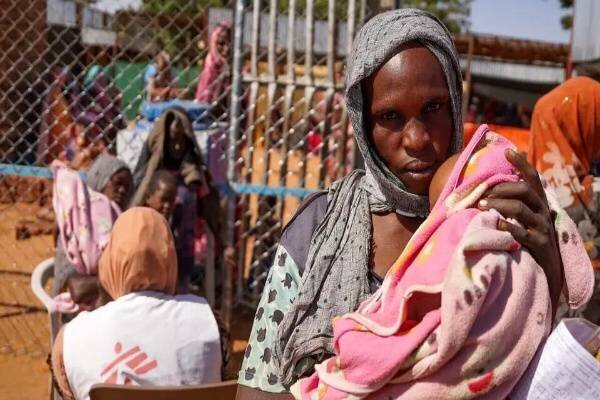
Sudan, a sprawling nation in the Horn of Africa traversed by the Blue and White Nile rivers, is grappling with a significant humanitarian and political crisis that has intensified in recent years. Since April 2023, hostilities between the Sudanese armed forces, under the leadership of General Abdel Fattah al-Burhan, and the Rapid Support Forces (RSF) militia, headed by Mohamed Hamdan Daqlou, known as Hemidati, have erupted into a full-fledged civil war. The ongoing conflict has resulted in over 20,000 deaths, the displacement of 13 million people, and left 30 million individuals in dire need of humanitarian aid. The capture of Al-Fashir, the capital of North Darfur state, on October 26, 2025, has not only altered the military landscape, but also sparked fears of a resurgence of the genocides seen in the early 2000s.
Sudan’s crisis extends beyond an internal dispute, emerging as a complex result of foreign influence, tribal tensions, and historical factors. Allegations have surfaced, accusing the United Arab Emirates of backing the Rapid Support Forces (RSF), while global pressure on Khartoum has intensified challenges surrounding national sovereignty.
The origins of the conflict have extended their reach, leading to an escalation of hostilities in the Darfur region.
The conflict in Sudan emerged from deep-seated internal divisions and rivalries among the nation’s military elites. Following the ousting of Omar al-Bashir in 2019, tensions escalated between the once-unified figures, Burhan and Hamidati, as they grappled over power and resource allocation. The SF, with origins in the Darfur Janjaweed militia and a history of ethnic repression, initiated hostilities in Khartoum before extending their campaign to the western parts of the country.
The region of Darfur, previously known for the tragic genocide of the 2000s in which over 300,000 lives were lost, is once again engulfed in turmoil. In a distressing development, the city of Al-Fashir, home to approximately 800,000 individuals, endured an 18-month siege by the RSF. The city’s capture in October 2025 signified not just a military setback but also highlighted the escalating humanitarian crisis. Harrowing reports have surfaced, detailing nighttime incursions into residential areas, the abduction of women and children, and widespread home destruction. The dire circumstances forced many inhabitants to seek refuge, fleeing 70 kilometers to the town of Tawila, where they were faced with scenes of civilian casualties and mass burials.
**Allegations of War Crimes and Ethnic Cleansing**
The fall of Fasher stands as a stark emblem of extensive human rights violations. In a mere three days, over 1,500 civilians, predominantly from the Masalit ethnic group, fell victim to ethnic cleansing and were killed. Six healthcare workers were kidnapped, with hefty ransoms demanded for their freedom, significantly crippling the medical infrastructure. Hospitals became military targets, and medical supplies were plundered. The UN Office of the High Commissioner for Human Rights has reported mass executions, systematic sexual assaults against women, and incidents of tribal violence. These events have deepened ethnic tensions and led to a dire humanitarian crisis. The Sudanese government has labeled these acts as “terrorist” and is working to bolster the military against the RSF militias.
**The Impact of International Assistance**
The United Arab Emirates has been notably involved in backing the RSF, with multiple reports suggesting that the nation has supplied military resources such as armored vehicles and light weaponry to the militias. Experts believe this support is driven by factors such as economic benefits, dominion over gold mines in Darfur, and access to the Suakin port. This external assistance has contributed to the protraction of the conflict and has reignited discussions surrounding international accountability for war crimes.
Current Humanitarian Conditions and Essential Data Points
Sudan is grappling with an expansive humanitarian crisis, as the United Nations reveals that a staggering 30 million individuals require aid. Some 25 million are experiencing severe hunger, while 13 million have been uprooted from their homes. Many of those displaced have sought sanctuary in neighboring nations including Chad, Egypt, and Ethiopia. In the Darfur region, over 250,000 people are currently besieged, deprived of essential access to food, medical aid, and security. The obstruction of relief pathways by rapid response forces has weaponized starvation. There are also reports of demographic cleansing and population restructuring in Darfur, posing potentially lasting ramifications for the social and ethnic balance of the region.
Domestic stakeholders involved in the ongoing crisis
The primary belligerents in the ongoing conflict are the Sudanese army and the Rapid Support Forces (RSF), though the situation is marked by additional complexities. The Sudanese army, under the leadership of Al-Burhan, is operational in the eastern and southern territories, focusing on upholding national dignity. Meanwhile, the RSF, bolstered by external backing, dominates the western regions. Islamist factions and local popular committees have taken on crucial roles in safeguarding civilians and documenting atrocities. The formation of civil-military coalitions could play a pivotal role during the post-conflict period; however, they currently face challenges in cohesion and coordination. Local committees, despite their limited resources, stand as an essential civilian protection mechanism.
**Global Response**
The international community has finally mounted a significant response to the escalating crisis. The United Nations, African Union, and European Union have all issued strong condemnations of the ongoing violence. The United States has taken decisive action by imposing sanctions on the commanders of the RSF, while the UN Secretary-General has urged an immediate cessation of arms shipments. In the region, influential countries are working to mediate talks between the army and the RSF. At the grassroots level, global campaigns and protests have ratcheted up pressure on nations backing the militias, as well as the broader international community. Despite these efforts, aid supplies fall far short of what’s required, leaving the humanitarian situation dire.
**Outlook for Peace**
Peace in Sudan is attainable yet remains delicate. The path forward involves three primary approaches:
The agenda for military-security matters encompasses the implementation of a ceasefire, the incorporation of the Rapid Support Forces (RSF) into the national army, and the establishment of a transitional government.
A comprehensive approach involving national dialogue, the formation of a transitional government, and the organization of elections.
Efforts in the human-social domain are focused on fostering national reconciliation, advancing reconstruction, and establishing social justice.
The prerequisites for success along these avenues involve mutual acknowledgment, elimination of external interference, the involvement of non-political elements, and the implementation of justice to avert retribution. By reinforcing internal frameworks and instituting a transitional parliament, the Sudanese authorities have the opportunity to restore their legitimacy. However, substantial challenges persist, including divisions within the military, the RSF’s overreach, and significant external pressures, all posing substantial threats to stability.
The situation in Sudan has evolved into a complex crisis due to the fall of Al-Fasher, the crimes committed by the Rapid Support Forces (RSF), and the involvement of foreign nations. Despite these challenges, there are pathways to stability and reconstruction through popular resistance, support for the national army, and international endeavors aimed at peacebuilding. Sudan’s potential for a stable future hinges on national reconciliation, justice, and curbing foreign interference.
In confidential operations, the United Arab Emirates has emerged as the primary benefactor of the Rapid Support Forces, exacerbating the conflict by covertly trafficking gold and dispatching advanced weaponry. Meanwhile, the United States, notwithstanding its assertions of impartiality, contributes logistical support to these forces via private security firms and bases in the Horn of Africa. Simultaneously, the European Union has indirectly influenced the situation through its silence and ongoing gold trade. Efforts to secure a ceasefire and deliver humanitarian aid, notably through the establishment of the Quartet, have thus far seen limited progress.