Leader Calls for Transformation, “New Birth” in Basij Organization
The Leader of the Islamic Revolution has called for organizational reform within the Basij, emphasizing the need to advance the slogan’s implementation.
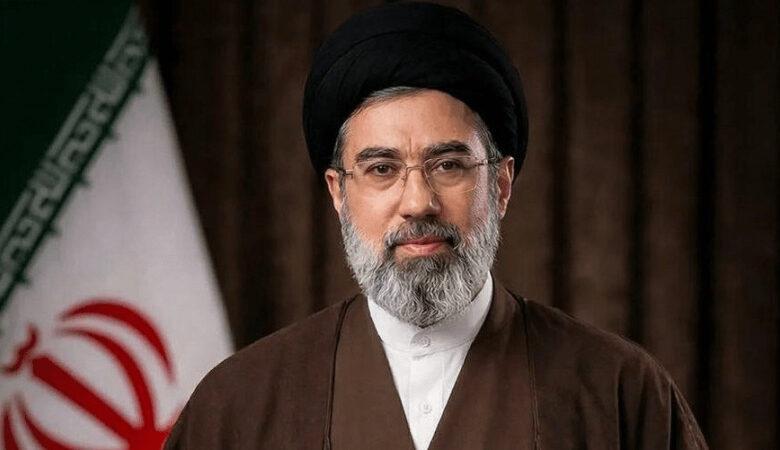
Pars Today reported that the Leader of the Islamic Revolution emphasized the need to transform the Basij Organization, identifying the realization of the slogan “Every Iranian, One Basiji” as one of its future priorities.
According to Pars Today, citing Mehr News Agency, Ayatollah Seyyed Mojtaba Hosseini Khamenei, Leader of the Islamic Revolution, issued a message on Thursday, November 26, marking Basij Week and the anniversary of the Basij’s establishment on the orders of Imam Khomeini.
The message reads in full:
In the name of God, the Most Compassionate, the Most Merciful.
Basij Week offers an opportunity to reassess the role and significance of the Basij, an institution founded on the initiative of the late Imam Khomeini. Over time, it brought together motivated and self-sacrificing Iranians from different generations who sought to uphold the dignity of Islam and Iran and were committed to the teachings of Imam Hussein, creating an organized force advocating truth and justice.
The Basij first established its military role during the eight-year Iran-Iraq War, when its presence on the front lines made it a central component of Iran’s war effort. Members of the group, ranging from young people to the elderly, were described as drawing on the religious atmosphere of the trenches and fortifications.
Basij members came to be associated in public discourse with faith, commitment, sincerity, courage, religious duty and self-sacrifice. Supporters portrayed them as embodying virtues traditionally attributed in Iranian literature to heroic figures. Following the Islamic Revolution, those ideals were presented as being reflected in real individuals wearing the Basij uniform and participating in acts of sacrifice during the war.
Although the eight-year Sacred Defense era ended honorably, it had a lasting impact on the country’s formal and, particularly, informal institutions through the development of the Basiji spirit. This spirit, fostered during the Sacred Defense under the guidance of Imam Khomeini and with the support of the broader population, became a significant national asset. I will now outline several points to further explain aspects of this message.
The Basij Organization must undergo a transformation alongside what has been described as the Iranian nation’s “Third Sacred Defense,” which has reportedly strengthened the Basiji spirit across the country, the statement said.
It called on the organization to develop a more modern and advanced version of the Basij by drawing on the increased public participation, and to work toward the slogan, “Every Iranian is a Basiji.”
The statement said members of the army, Islamic Revolutionary Guard Corps, police, government and parliament—as well as large numbers of ordinary citizens—consider themselves connected to the Basij because of their support for its values and ideology.
It also cited demonstrators who have gathered in streets and squares, along with members of the Sacrifice for Iran Campaign, as examples of the broader movement. Many people are not formal, card-carrying members of the Basij but support its worldview and adapt their conduct and principles to it when circumstances require, the statement said.
The organization should make the fullest possible use of what it described as a God-given opportunity, it added.
Beyond the capacity already established, the official Basij Organization should work continuously to promote the Basiji spirit across the country, according to the statement. It said Basij members could help spread these values through their conduct, including kindness, compassion, respect for the public, personal and collective piety, humility, modesty, self-sacrifice, and a rejection of extravagance and self-promotion.
Such behavior, it added, could enable the Basij to serve as a “light of the nation” in neighborhoods, cities and villages, encouraging others to adopt the same principles and way of life.
Third, Basij members’ central commitment is to the teachings of Hussain (pbuh), which they regard as a faithful interpretation of the Islam taught by Prophet Muhammad (pbuh). Their alliances, opposition, loyalty and rejection are guided by this principle.
They draw on the Quranic injunctions to be “merciful among themselves” and “stern against the disbelievers” (Quran 48:29). In practice, this means showing compassion and making sacrifices for the people, the Islamic system and the Revolution, while remaining committed to confronting its perceived enemies.
The statement also emphasizes that preserving Iran’s social cohesion and national unity should be a common responsibility among Basij members. It describes unity as a key source of strength and says its importance has become increasingly clear amid the continued military successes of Islamic forces.
Fourth, throughout its existence, the Basij and its members have helped address numerous shortcomings in Iran’s formal and informal institutions. The organization’s considerable expansion during this period of what was described as the Iranian people’s “Bi’tha” has created a formidable force, combining the Basij’s institutional capabilities with individuals who identify themselves as Basijis in spirit.
These include standard-bearers in public squares and streets, the Janfada community, and others committed to advancing individual and social development. Their convictions are portrayed as the true foundation of the Basij. Supporters say this broad pool of collective capacity should be mobilized to help address the country’s challenges and take advantage of new opportunities, giving greater substance to the slogan: “Every Iranian is a Basiji.”
The Basij of Iran is expected to be remembered as a prominent example of mutual support and as a strong embodiment of the concepts of the Ummah and the nation, providing a foundation for future advances and progress.
The statement also offered prayers for the Basij’s fallen members, asking that they be granted entry into Paradise and the honor of being among the Ahl al-Bayt. It further called for patience and good health for wounded veterans, and for all members of the Basij in Iran and the Resistance Front—including the speaker—to be counted among the supporters of Imam Mahdi and to receive his prayers, victory and blessings.
Sayyid Mojtaba Hosseini Khamenei
Azar 5, 1405 (Nov. 26, 2026)