Iran’s $60 Billion Share of BRICS’ $1.2 Trillion Trade Signals Setback for US Economic Pressure
Russia’s Deputy Foreign Minister Sergey Ryabkov said on November 20 that trade among BRICS members had reached $1.2 trillion, underscoring the bloc’s growing economic influence as it increasingly challenges Western dominance of global economic and financial systems.
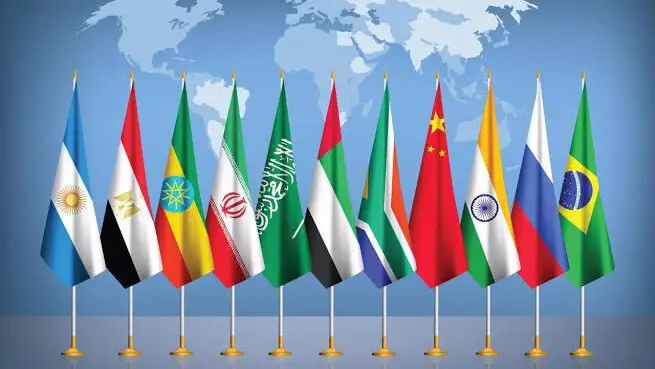
Russia’s Deputy Foreign Minister Sergey Ryabkov said on November 20 that trade among BRICS nations had reached $1.2 trillion, underscoring the bloc’s growing economic influence as it increasingly challenges Western dominance of global economic and financial systems.
Speaking at the International BRICS Young Women’s Forum in St. Petersburg, Ryabkov said member countries would continue efforts to conduct trade without using the US dollar for transactions.
The announcement is particularly significant for Iran, which is facing US-Israeli military and economic pressure while expanding trade ties, transport infrastructure and financial links with major non-Western economies.
For Tehran, the expansion of BRICS trade comes as Washington continues to use the dollar and global banking infrastructure as economic leverage, while Iran deepens ties with China, Russia, India and neighboring countries.
Russian President Vladimir Putin had already cited $1.2 trillion in intra-BRICS trade during the September 2026 BRICS summit in New Delhi, underscoring the scale of commercial exchanges among the grouping’s members.
A March 2026 UN Trade and Development report recorded $1.17 trillion in intra-BRICS merchandise exports in 2024, marking more than a thirteenfold increase since 2003.
For Iran, the importance stems from the expanding commercial network linking major energy producers, industrial economies, agricultural exporters and manufacturing hubs beyond the Western economic sphere.
Washington’s use of the dollar as a policy tool has prompted countries under American sanctions to increase trade in national currencies, establish alternative payment systems and reduce dependence on financial channels controlled by Western powers.
India proposed linking BRICS central bank digital currencies in September 2026 to facilitate cross-border transactions. The New Delhi Declaration issued that month called for deeper cooperation on cross-border payments and settlements in local currencies.
India’s proposal to link BRICS central bank digital currencies has created another pathway to reduce reliance on dollar-centered financial transactions.
Additional payment arrangements could facilitate trade with participating economies without requiring all transactions to go through traditional dollar-based correspondent banking channels.
Iranian Trade Promotion Organization Deputy Head Mohammad Sadegh Gannadzadeh said on September 17 that Iran’s annual trade with BRICS members had reached approximately $60 billion.
Iran exported $23 billion in goods and imported $37 billion, an official said, outlining the scale and composition of its trade ties with the grouping.
The figures indicate that Iran already conducts substantial trade with BRICS members, despite US-Israeli economic pressure and Washington’s efforts to limit Tehran’s access to international markets.
Gannadzadeh identified trade, freight transport, investment, customs cooperation and local-currency payments as areas where Iran could deepen its existing ties with member countries.
The figures underscore Iran’s role as a key commercial partner within BRICS, particularly for countries seeking energy supplies, petrochemicals, agricultural goods and access to regional transport markets.