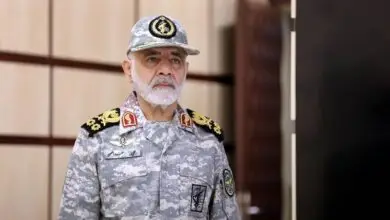
Iran: Zionist Regime Destabilizing Region with Somaliland Recognition
Iran has once more denounced Israel's self-proclaimed recognition of Somaliland, labeling the action as "fundamentally baseless and meaningless." Tehran asserts that this decision forms part of a larger strategy intended to destabilize the region.
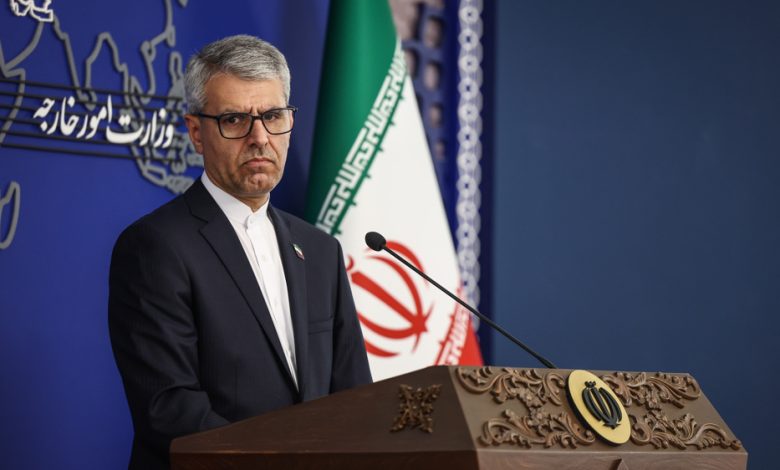
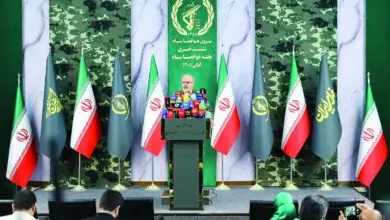
During a press conference on Monday, Foreign Ministry spokesperson Esmaeil Baghaei stated that no support had been given to the action, emphasizing that acknowledging a section of an independent nation and a segment of Somalia’s territory was devoid of any legal or political basis.
An official has stated that the move, executed by an entity plagued by its own illegitimacy, was designed to divide Muslim nations, hasten regional disintegration, and render the area more susceptible to Israeli ambitions and acts of aggression.
He referenced official statements from the Organization of Islamic Cooperation, the Arab League, and the African Union, each of which had firmly opposed the purported recognition.
Baghaei stated that there is no foundation for such actions within the United Nations framework or under international law, especially concerning the principles of territorial integrity and national sovereignty.
An official has indicated that the matter transcended a mere endeavor to carve out a section of a sovereign Muslim state. Instead, it was part of a broader scheme aimed at destabilizing an extensive region that encompasses West Asia, the Horn of Africa, and the Red Sea.
Baghaei concluded with optimism that this development would act as a wake-up call for nations both within the region and globally. He highlighted the Islamic Republic’s perspective, asserting that the actions of the Israeli regime are “inherently anti-peace,” designed to incite tension, division, and conflict across the region.
The regime announced its recognition of the self-proclaimed Republic of Somaliland as a “sovereign state” on Friday, prompting widespread international criticism.
Israeli military activities spark tensions: Iran asserts its capability to address any obstacles.
Baghaei emphasized that the Zionist regime aimed for a “defenseless” region. However, he asserted that regional nations now concur that “the sole path to enduring peace and stability is to curb the Zionist regime.”
In response to an inquiry regarding the possibility of Israeli Prime Minister Benjamin Netanyahu proposing a new plan to Trump for an assault on Iran during their upcoming White House meeting, he stated that the Islamic Republic remains unfazed by psychological tactics. He emphasized that the nation’s Armed Forces are steadfastly dedicated to bolstering their strength.
He stated that with the backing of the Iranian people, they intend to effectively overcome any obstacles they face, with God’s will.
Iran’s influence and prowess are derived from its populace and national resources, emphasizing a reliance on internal capabilities, which have been consistently showcased in practice.
Circumstances deemed unsuitable for productive negotiation.
An official commented on the reports regarding Iraq’s offer to mediate between Iran and the United States, expressing that the Islamic Republic values Baghdad’s attention to regional issues.
The commencement of any negotiation process necessitates that the involved parties adhere to established negotiation norms, while also considering the experiences and lessons learned from the past five or six months.
The official indicated that Washington has been utilizing diplomatic efforts as a guise during the latest round of indirect negotiations with Tehran, potentially setting the stage for coordinated Israeli-American strikes on the Islamic Republic.
The initiation of a negotiation process remains impractical until this prerequisite is fulfilled.
The Islamic Republic, he noted, has consistently maintained a commitment to diplomacy and stands ready to employ it whenever deemed both effective and efficient.
Iranian diplomats stationed in Venezuela continue to fulfill their official responsibilities.
Baghaei has refuted claims concerning the withdrawal of Iranian diplomats from Venezuela, assuring that the ambassador and personnel of the Iranian Embassy continue to perform their responsibilities with dedication as usual.
The embassy remains operational, with assertions regarding the withdrawal of Iran’s diplomatic mission or its personnel being dismissed as elements of a psychological campaign encountered in recent months.
Iran has affirmed its steadfast commitment to maintaining the territorial integrity and unity of Yemen as a guiding principle in its foreign policy considerations regarding the region.
Officials have expressed concerns that any actions compromising Yemen’s territorial integrity could play into the hands of the Zionist regime’s interests and ambitions, posing a significant threat to the region’s overall security.
He underscored the significance of intra-Yemeni dialogue as a means to stabilize the situation in Yemen and across the Arab Peninsula. He affirmed that Tehran would not hesitate to provide any assistance that might aid in fostering this interaction.
Iran upholds its longstanding adherence to the One-China principle, confirming its unwavering stance on the matter.
Baghaei criticized the United States’ recent significant arms sales to Taiwan, asserting that the transaction blatantly violated the One-China policy, which stands in stark contrast to the Islamic Republic’s “principled position.”
He stated unequivocally that Iran is resolute in maintaining its stance, asserting that the actions taken by the United States only serve to provoke and heighten tensions among countries in the region, lacking any indication of being conducted with genuine intent.
Iran and Russia have clarified that their bilateral relations are not aimed at targeting or undermining any third country, reiterating their mutual cooperation is independent of external influences.
In light of recent declarations by Ukrainian officials dismissing Iran’s involvement in the production of missiles for Russia, it was highlighted by a spokesperson that the Ukrainian president had acknowledged this information several months prior.
Baghaei reported that Volodymyr Zelensky confirmed Kiev lacked evidence of Iran supplying missiles to Russia. He emphasized that the ties between Tehran and Moscow are rooted in longstanding mutual interests and respect, and not aimed at any third nation.