Iran’s Evolution: Khorramshahr Missile Developed into a Strategic Arsenal Over Eight Years
It has been eight years since Iran conducted the successful public test launch of its Khorramshahr medium-range ballistic missile on September 23, 2017. This significant milestone represented a major advancement in Iran's domestic defense technology.
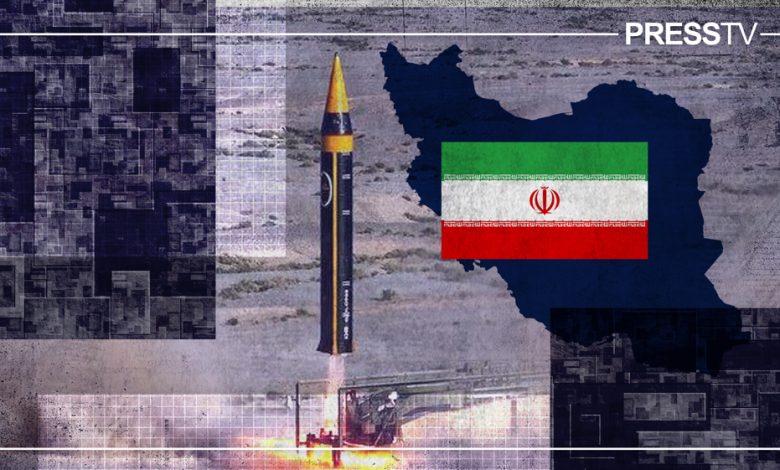
At the time, televised footage showcased the missile’s impressive ascent, captured from a nose-cone camera, marking the launch as a pivotal event in the annals of Iran’s aerospace sector.
The recent launch transcended its primary objective as a weapon system test, serving as a showcase of cutting-edge engineering and the realization of a sophisticated strategic design philosophy.
The missile, christened after the steadfast city of Khorramshahr in southwest Iran—a symbol of Iranian resilience during the 1980s Imposed War—marks a new era in deterrence technology.
The development of the Khorramshahr-4, referred to as the Kheibar missile, highlights a persistent path of technological advancement and enhancement.
The advancement within the Khorramshahr missile family signifies a strategic initiative aimed at extending range, increasing payload capacity, and improving survivability through advanced engineering methodologies.
**Iran Unveils Khorramshahr Missile**
In a strategic demonstration of its defense capabilities, Iran has unveiled the latest iteration of its Khorramshahr missile. The missile, named after a pivotal city in the Iran-Iraq war, is reported to have an extended range and enhanced precision. This development comes amid growing tensions and highlights Iran’s continued focus on advancing its military technology.
The Khorramshahr missile, first introduced in 2017, showcased a striking design with notable size and capabilities. It stands at approximately 13 meters long with a diameter of 1.5 meters and a launch weight nearing 20 metric tons.
The liquid-fueled, single-stage missile boasts a significant strategic range, capable of reaching distances up to 2,000 kilometers. This capability positions numerous regional targets within its operational range, solidifying its role as a crucial component of strategic deterrence.
A distinctive design element that set the Khorramshahr apart from previous Iranian ballistic missiles, including the Shahab-3, was the intentional absence of sizable stabilizing fins at the missile’s base.
This marked a noteworthy progression in guidance and control systems, emphasizing the reliance on thrust vector control to maintain stability during the initial boost phase, as opposed to using external aerodynamic surfaces.
The removal of these fins led to a reduction in both the overall weight and radar signature, while also streamlining transport and handling logistics, especially for the road-mobile Transporter-Erector-Launcher (TEL) system.
**Payload and Performance of the Missile**
Khorramshahr has achieved a significant milestone with its payload capacity, capable of carrying a warhead of up to 1,800 kilograms. This considerable capacity accommodates various warhead types, including unitary high-explosive, cluster munitions, or potentially multiple re-entry vehicles.
The warhead was designed with a basic conical shape and a blunt tip, engineered to be aerodynamic and capable of withstanding intense thermal stress during its high-speed re-entry into the Earth’s atmosphere.
The missile utilizes a liquid-propellant engine to generate the substantial thrust necessary for executing its mission profile.
The Khorramshahr missile is capable of achieving impressive speeds surpassing Mach 15 when traveling beyond the Earth’s atmosphere, and it can reach an apogee of roughly 126 kilometers when deployed on a trajectory designed for maximum range.
The 2017 test achieved significant success in proving the seamless integration of complex systems, confirming the efficiency of its propulsion, mid-course guidance, and re-entry vehicle separation processes.
The Khorramshahr-2, an extended-range ballistic missile, has been noted for its advancements in reach and capability. This model represents a significant development in missile technology, featuring enhanced propulsion systems and increased precision, thus posing substantial implications for regional and international security dynamics.
In 2019, the introduction of the Khorramshahr-2 variant underscored a definitive trend of ongoing enhancement, particularly aimed at augmenting its operational range capabilities.
In a notable advancement, the latest version features a lighter re-entry vehicle. Engineers successfully extended the missile’s potential range by decreasing the weight of the frontal component without sacrificing payload efficiency.
The initial Khorramshahr missile boasted a range of 2,000 kilometers, whereas the enhanced Khorramshahr-2 is reportedly capable of striking targets up to 3,000 kilometers away.
The enhancement showcased an advanced comprehension of missile dynamics and the significant compromises between payload capacity and range.
The presentation of the parade model indicated potential advancements in guidance technology, pointing to a shift towards enhanced precision—an essential component for the efficacy of any strategic missile system.
The transition from the original to the second-generation model exemplified a strategic effort to address engineering hurdles and enhance performance capabilities.
**Khorramshahr-4 and Its Advanced Systems**
Iran has unveiled the latest iteration of its ballistic missile series, the Khorramshahr-4, showcasing significant advancements in military technology. The missile features an array of sophisticated systems designed to enhance precision and range, marking a notable development in the nation’s defense capabilities. Details surrounding its technical specifications and potential strategic applications remain limited as international observers closely monitor the implications of this new military asset.
In May 2023, Iran unveiled its most advanced publicly disclosed missile, the Khorramshahr-4, also known as the Kheibar missile. This new addition to Iran’s arsenal demonstrates cutting-edge advancements in missile technology, showcasing the country’s latest developments in this field.
The latest iteration of this variant maintains its impressive 2,000-kilometer range, now achieved through a more sophisticated and efficient design. The Kheibar missile supports a slightly lighter yet still considerable 1,500-kilogram warhead. It incorporates significant advancements that bolster both tactical effectiveness and durability on the field.
One of the most significant advancements is the considerable decrease in launch preparation time, now reported to be less than 15 minutes from initiation to launch.
The utilization of hypergolic, self-igniting liquid propellants has enabled this advancement, effectively removing the necessity for intricate fuel-mixing processes before ignition.
The swift launch capability greatly enhances survivability by reducing the timeframe in which an adversary might detect and engage the missile system.
The advancements in precision guidance and enhancements in survivability measures have become focal points in the latest defense strategies. These improvements are integral in bolstering accuracy and ensuring greater protection for military operations.
The guidance and control systems of the Khorramshahr-4 missile mark a notable engineering milestone, leading to a reported circular error probable (CEP) of within 30 meters at its maximum range.
This precise targeting is achieved through an advanced system that enables the missile to navigate and alter its path during the mid-course stage, while remaining beyond the Earth’s atmosphere.
Moreover, the re-entry vehicle is engineered to deactivate its external guidance receivers as it re-enters the atmosphere, making it immune to electronic countermeasures in the final phase.
The design of the warhead has been enhanced, removing the necessity for a slender-wing configuration for stability. This advancement facilitates a more volumetrically efficient structure, enabling the accommodation of a larger payload of explosive material.
The missile demonstrates notable performance capabilities, boasting a ground impact force duration of 280 seconds and a vacuum impact force of 300 seconds, underscoring its significant energy delivery upon reaching its target. Covering a distance of approximately 2,000 kilometers in just 12 minutes, it provides a limited window for defensive systems to mount a response.
**MIRV and Advanced Warhead Capabilities**
Developments in Missile Technology: Enhancements in Multiple Independently Targetable Reentry Vehicles (MIRV) and sophisticated warhead capabilities are reshaping the landscape of global defense strategies. This technological progression promises to enhance the precision and effectiveness of missile systems. As nations invest in improving their deterrence and combat readiness, these advancements in weaponry are proving to be pivotal components in modern military arsenals, influencing geopolitical dynamics worldwide.
The Khorramshahr series, notably the Kheibar variant, showcases an advanced capability with its integration of multiple independently targetable re-entry vehicle (MIRV) technology.
A missile outfitted with a Multiple Independently-targetable Reentry Vehicle (MIRV) system is capable of deploying several warheads, each designed to strike distinct targets over a wide region.
This advancement marks a significant achievement in missile technology, necessitating expertise in sophisticated post-boost vehicle control, accurate release systems, and autonomous guidance for each re-entry module.
A MIRV-capable system such as the Khorramshahr-4 presents a formidable challenge to missile defense frameworks, as it has the capability to overwhelm defenses that are structured to handle a limited number of incoming threats.
The Kheibar missile is capable of impacting up to 80 different targets within a specified region, utilizing sophisticated sub-munition or cluster warhead technology to enhance its operational effectiveness. The deployment of warheads at hypersonic speeds adds an additional layer of difficulty for adversary air defenses attempting interception.
**Legacy of Technical Achievement**
The development trajectory of the Khorramshahr missile over the past eight years, culminating in the sophisticated Khorramshahr-4, highlights the continuous advancements of Iran’s aerospace engineering industry.
This initiative has been steered by specific goals: boosting range through weight reduction and propulsion efficiency, sharpening accuracy with cutting-edge guidance systems, enhancing survivability with swift launch protocols, and optimizing strategic impact with adaptable and sophisticated warhead options.
The Khorramshahr program showcases an advanced stage of technical expertise, integrating knowledge from various fields such as aerodynamics, propulsion, materials science, and guidance technology. This mature, iterative development process is evident as each iteration incorporates lessons learned from its predecessors.
The Khorramshahr missile family stands as a testament to indigenous technological prowess, forming a crucial component of Iran’s strategic defense framework. This represents eight years of relentless progress in one of the most demanding spheres of contemporary engineering.
Advancements in Khorramshahr-5: Addressing the ICBM Dilemma
Iran’s aerospace program appears poised for a substantial and expected advancement with the potential development of the Khorramshahr-5, an intercontinental ballistic missile (ICBM). This progression is built upon the established technological foundations of the Khorramshahr series and other recent advancements.
While there has been no official confirmation of such a project, Tehran has traditionally maintained its publicly declared 2,000-kilometer range limit for ballistic missiles. However, the expertise gained from over two decades of intensive development suggests a clear trajectory towards achieving intercontinental capability.
Reports suggest that the projected specifications for the Khorramshahr-5 missile could include a range extending to 12,000 kilometers, velocities nearing Mach 16, and the capability to carry a two-ton warhead. These parameters are consistent with Iran’s established advancements in propulsion systems, materials science, and missile guidance technology.
The recent introduction of the Fattah hypersonic missile signifies advancements in Iran’s defense sector, as it demonstrates the nation’s capability to operate at comparable speeds and utilize sophisticated heat-resistant materials for atmospheric re-entry. This development indicates that Iran is making strides in overcoming some of the most challenging technological obstacles associated with the terminal phase of an intercontinental ballistic missile.
The key obstacle in transitioning from a medium-range ballistic missile, such as the Khorramshahr-4, to a genuine intercontinental ballistic missile (ICBM) involves achieving proficiency in multi-stage rocket propulsion and guaranteeing the dependability of re-entry vehicles across significantly greater distances and at higher velocities.
Iran’s work with satellite launch vehicles (SLVs) like the Simorgh and the developing Soroush is providing crucial insights into upper-stage propulsion and spaceflight navigation. These areas of expertise are essential components of an intercontinental ballistic missile (ICBM) flight profile.
A dedicated military intercontinental ballistic missile (ICBM) is fundamentally distinct from civilian space launch vehicles (SLVs) by design and purpose. Unlike SLVs, which are engineered for delivering payloads into orbit, a military ICBM would prioritize features such as rapid fueling, enhanced mobility, and survivability. These characteristics align with the road-mobile design philosophy that is characteristic of the Khorramshahr missile family.
Defense Minister Aziz Nasirzadeh announced the successful testing of a two-ton warhead at hypersonic speeds, signaling significant advancements in payload technology designed to endure the extreme thermal and kinetic pressures associated with intercontinental flight.
Such warheads, whether they are conventional or strategic, could represent a significant advancement towards achieving genuine intercontinental ballistic missile (ICBM) capability.
The decision to pursue the development of an intercontinental ballistic missile (ICBM) transcends purely technical considerations, representing a strategic maneuver that could broaden Iran’s deterrence strategy from a regional to a global scope. This shift could significantly alter its position and influence within the realm of international security.
An operational intercontinental ballistic missile (ICBM) developed by Iran could serve as a direct deterrent to major global powers and introduce complex challenges to strategic considerations extending well beyond the West Asian region.
Should it come to fruition, the Khorramshahr-5 would embody the results of a gradual, methodical advancement in technology, rather than a breakthrough achieved overnight.
Utilizing advancements in liquid-fuel propulsion, hypersonic vehicle control, and an iterative design approach, Iran stands on the brink of joining the elite group of missile-capable nations, potentially altering the landscape of global strategic stability for many years ahead.