Rezaei Warns: Any Hostile Act Against Iran Will Mark a Historical Consequence for the U.S.
Iran has cautioned the United States, indicating that any further military actions against the nation would prompt a vigorous retaliation targeting U.S. military and economic assets. Additionally, Tehran emphasized the necessity for Washington to implement tangible measures before Iran considers reopening the Strait of Hormuz.
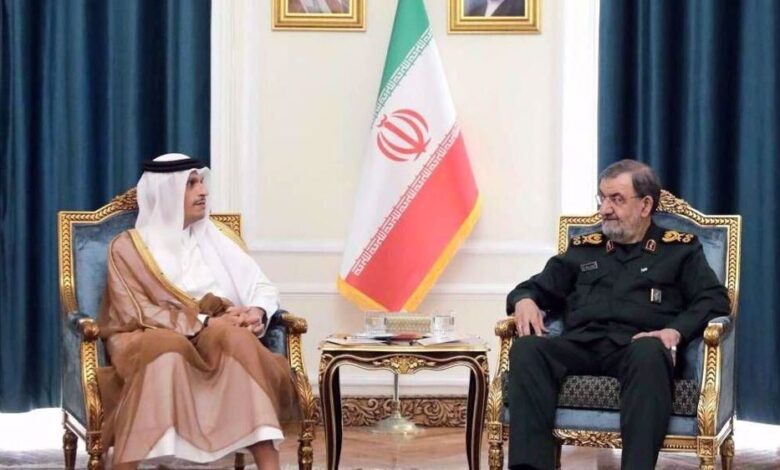
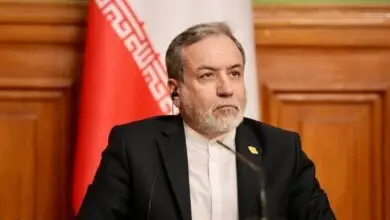
In a meeting held in Tehran on Thursday, Major General Mohsen Rezaei, the Secretary of Iran’s Supreme National Security Council (SNSC), delivered a warning during discussions with Qatari Prime Minister Sheikh Mohammed bin Abdulrahman Al Thani.
Rezaei stated that there is a lack of trust towards the United States, citing a history of perceived betrayals in diplomatic and negotiation efforts.
In a stern warning, a spokesperson declared that any malevolent action by the United States against Iran will be met with a retaliatory response targeting its military and economic interests, significant enough to be remembered in history.
Rezaei emphasized that the United States must take concrete actions to fulfill Iran’s requirements as a prerequisite for Tehran to contemplate the reopening of the Strait of Hormuz.
Al Thani conveyed appreciation for Iran’s support to Qatar during challenging times, reaffirming the robust relationship between the two nations.
The Qatari Prime Minister affirmed that there has never been any reluctance in cooperating with the Islamic Republic of Iran.
He further emphasized Doha’s commitment to ongoing collaboration with Tehran in light of the delicate regional circumstances, asserting that Qatar’s actions stem from a sense of responsibility.
Al Thani held discussions with Iranian Parliament Speaker Mohammad Baqer Qalibaf, who cautioned that any US efforts to enforce an economic blockade on Iran would not succeed. He emphasized that Washington must adhere to its obligations outlined in the Islamabad Memorandum of Understanding (MoU).
Qatar played a mediating role in the agreement, as highlighted by Qalibaf. He criticized Trump’s administration, accusing it of making misguided decisions based on erroneous information. According to Qalibaf, these misjudgments are squandering America’s financial, military, and human resources, jeopardizing the region’s future, and threatening the interests of the Iranian people.
He characterized the suggested economic blockade as yet another antagonistic move by the United States, emphasizing that the Iranian people would eventually recover their rights with dignity.
In the Strait of Hormuz, Al Thani expressed approval for the understanding achieved between Iran and Oman concerning maritime traffic, noting that the diplomatic process could play a significant role in restoring stability to the region.
Qatar reiterated its dedication to sustaining diplomatic initiatives focused on mitigating tensions and promoting resolutions to the regional crisis.
In a distinct meeting with Iranian Foreign Minister Abbas Araghchi, Al Thani engaged in discussions concerning bilateral relations, regional dynamics, and Qatar’s ongoing mediation initiatives.
Iranian Foreign Ministry spokesperson Esmaeil Baghaei characterized the visit as a segment of ongoing Iran-Qatar interactions focused on deepening bilateral relations and enhancing peace and security within the region.
He stated that Qatar has been actively involved in recent months in efforts to avert further escalation in the wake of the US-Israeli military actions against Iran. He noted that Tehran and Doha plan to explore ways to sustain the Qatari mediation initiative.
The most recent phase of US-Israeli military actions commenced on February 28, marked by a series of extensive attacks targeting the Islamic Republic, initiated jointly by the United States and Israel.
Iran launched a series of daily missile and drone strikes targeting American and Israeli assets in the region.
Tehran and Washington signed the Islamabad Memorandum of Understanding on June 17, aiming to put an end to hostilities. Nonetheless, ongoing US strikes in southern Iran have breached the terms of the agreement.
Iran has halted communications with the United States, insisting that discussions will not recommence until the U.S. ceases its military actions and aggressive language.