Anti-Iran Resolution at IAEA Board of Governors Won’t Impact Safeguards Status: Envoy
Iran's representative to the International Atomic Energy Agency (IAEA) has stated that the resolution perceived as anti-Iranian, passed by the IAEA Board of Governors, will not alter Iran's current status regarding the implementation of safeguards.
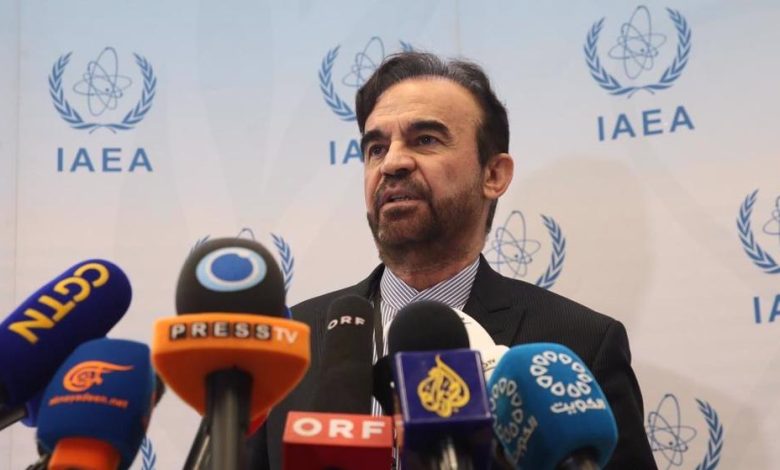
Reza Najafi delivered his comments on Saturday, in anticipation of the forthcoming Board of Governors meeting scheduled for November 19 to 21 at the agency’s headquarters in Vienna.
The United States, in collaboration with Britain, France, and Germany—known collectively as the E3—are set to present a resolution concerning Iran’s cooperation with the International Atomic Energy Agency (IAEA) at the upcoming event.
Najafi contended that Washington alongside the E3 countries is making another attempt to exploit international mechanisms to enforce what he described as unreasonable and coercive positions on Iran.
The Iranian envoy has stated that compelling IAEA Director General Rafael Grossi to anchor reports on outdated UN Security Council resolutions is entirely illegal and unwarranted. This move, the envoy argues, will further exacerbate existing complexities and deliver another blow to diplomatic efforts.
He observed that the efforts by the United States and the E3 countries are not expected to alter the current status of safeguard implementations in Iran, which have been impacted by the 12-day US-Israeli conflict against the Islamic Republic in June.
Najafi called on all Board of Governors member states to oppose the detrimental unilateral actions implemented by the United States and its European partners.
The Iranian envoy emphasized Iran’s entitlement to respond appropriately to any illegal or unjust actions taken against it.
On June 25, following the conclusion of the 12-day US-Israeli offensive and subsequent Iranian retaliatory strikes, Iran’s parliament decisively voted to halt all collaboration with the International Atomic Energy Agency (IAEA).
Legislators argued that the decision was influenced by apprehensions that resolutions from the agency, particularly the Board of Governors’ directive issued on June 12, had paved the way for the Israeli attacks.
In light of renewed talks with the International Atomic Energy Agency (IAEA) in September, Tehran issued a warning against Britain, France, and Germany for their move to activate the United Nations snapback mechanism following the Cairo agreement. Tehran stated that this action introduced “new conditions,” effectively nullifying the established framework.
The agency has opted not to criticize the E3’s decision, choosing instead to concentrate on pressing Iran to adhere to its safeguards obligations in every circumstance.