Iran Condemns ‘Systemic Double Standards’ in Nuclear Sphere, Asserts Resistance to External Pressure
Iran's permanent envoy to the United Nations has issued a strong condemnation of what it perceives as the politicization of nuclear monitoring, criticizing the global community for its inaction in the wake of the extraordinary assaults in June on the safeguarded nuclear sites of the Islamic Republic.
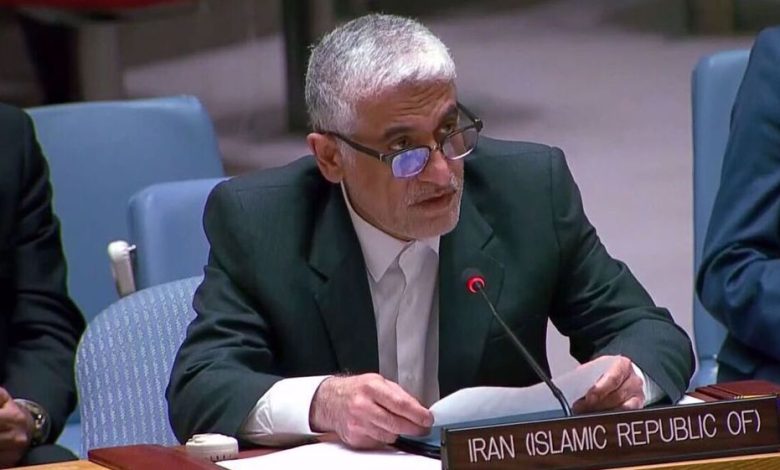
Amir Saeid Iravani delivered remarks on Friday at the 80th Session of the United Nations General Assembly, which focused on the latest report from the International Atomic Energy Agency (IAEA) concerning the nation.
The envoy began his statement emphasizing the importance of the International Atomic Energy Agency maintaining professionalism, objectivity, and a lack of political bias, cautioning that its credibility hinges on unwavering impartiality.
He emphasized that nuclear energy is crucial for national progress, asserting that access to peaceful nuclear technology under Article IV of the Nuclear Non-Proliferation Treaty (NPT) is an “inalienable right” that should not be restricted under any circumstances.
An official has emphasized that safeguards are designed to facilitate peaceful nuclear activities, not impede them, while criticizing persistent double standards. These standards, the official argued, unfairly restrict developing nations while offering political, military, and nuclear protections to the Israeli regime, which, as a non-NPT entity, holds an undeclared arsenal of weapons of mass destruction.
“He stated that these practices fail to safeguard non-proliferation. Instead, they weaken it and significantly compromise the agency’s mandate for technical cooperation.”
The ambassador addressed the unprovoked and unlawful Israeli-American attacks on Iran’s protected nuclear facilities between June 13 and 25, describing them as “an unparalleled act of aggression.”
Iravani has reported that the “Israeli regime, mere hours after a politically-charged resolution was adopted by the IAEA Board of Governors, initiated extensive military attacks on fully monitored sites,” resulting in the deaths and injuries of thousands of Iranians.
On June 22, the United States launched an offensive directly targeting sites overseen by the International Atomic Energy Agency (IAEA), reportedly contravening the United Nations Charter, international law, the IAEA Statute, and UN Security Council Resolution 487, he stated.
He stated that the incident transcended a simple attack on Iran, characterizing it as a broader challenge to the authority of the United Nations and a violation of the integrity of the entire safeguards system.
Iravani issued strong criticism towards both agency officials and the Security Council for their lack of condemnation of the attacks, highlighting that decades of General Conference resolutions have consistently emphasized that nuclear facilities should never be targeted under any circumstances.
In a staunch reiteration of the Islamic Republic’s enduring adherence to the Nuclear Non-Proliferation Treaty (NPT), he dismissed Western accusations about Iran’s compliance. He accused the United States and the European trio of the United Kingdom, France, and Germany (E3) of consistently propagating “fabrications” from the Israeli regime regarding Iran’s peaceful nuclear energy program, while turning a blind eye to Tel Aviv’s own nuclear stockpile and its refusal to permit international inspection.
He emphasized that Iran remains in full compliance with the Nuclear Non-Proliferation Treaty (NPT) and its associated safeguards, while adhering to the terms of the Joint Comprehensive Plan of Action (JCPOA). This 2015 nuclear accord involves the Islamic Republic and major global powers, including the United States and the E3 group.
Referring to reports from the International Atomic Energy Agency (IAEA), he stated that Tehran’s temporary halt in cooperation with the agency was a direct consequence of military strikes. He urged the creation of a new international framework aimed at safeguarding nuclear facilities and personnel from armed assaults, emphasizing that the integrity of the global safeguards system hinged on these protections.
Iravani highlighted that the Islamic Republic and the IAEA had made strides through a memorandum of understanding signed on September 9 in Cairo, which set procedures to renew cooperation following post-attack conditions. However, he noted that this progress is at risk due to renewed tensions from the US and European countries, specifically the E3’s move to initiate “snapback” sanctions against the nation. Tehran argues that the use of “snapback” is legally void following the expiration of Resolution 2231, which had endorsed the JCPOA, on October 18.
The envoy’s comments emerged as the International Atomic Energy Agency (IAEA) gears up to unveil a fresh report aiming to assess Iran’s enriched uranium reserves based on data available prior to the recent attacks. The report notably refrains from passing any judgment on the strikes carried out by Israel and the US or the assassinations of Iranian nuclear scientists during the June offensives.
The report also neglected to discuss the agency’s involvement in facilitating the Israeli-American offensive through a prior Board of Governors’ resolution and omitted any reference to the E3’s illegal effort to activate the “snapback” mechanism.
In his concluding remarks, Iravani firmly rejected ongoing threats and attempts of coercion directed at the Islamic Republic, emphasizing that their response is dictated solely by respect, adherence to legality, and the principle of equality.