Iran Calls for UN Security Council Reform and Advocates for BRICS in Global Leadership
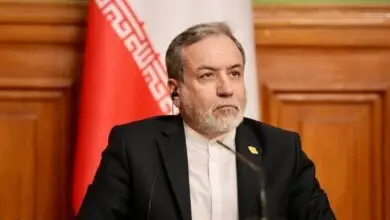
Iranian Foreign Minister Abbas Araghchi has called for substantial reforms to the United Nations and global governance frameworks, arguing that the existing structures have lost their legitimacy and primarily cater to the interests of a small group of influential nations.
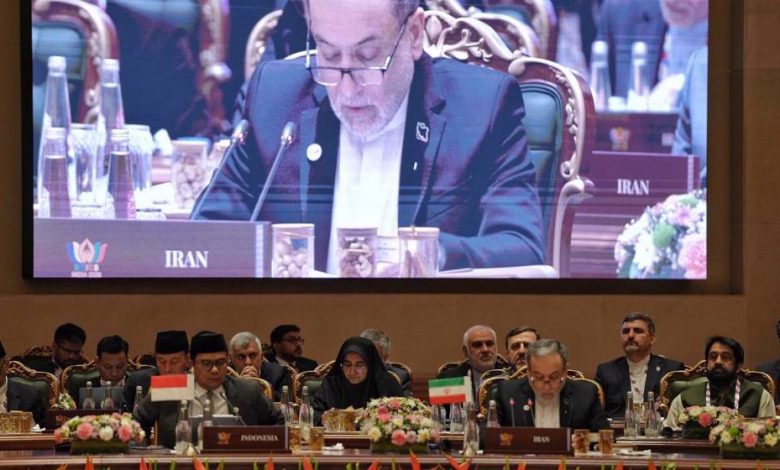
During a Friday address at the BRICS foreign ministers’ meeting in New Delhi, Araghchi highlighted the current global landscape, describing it as being in “a period of structural instability and a profound crisis of trust.”
He informed fellow foreign ministers that the current international order, established in the aftermath of World War II, is inadequate to address the challenges and realities of the 21st century.
Emerging powers and traditional decision-making structures have created a widening gap, posing a threat to global stability and contributing to widespread inequities in the allocation of power, wealth, and development opportunities.
The Iranian Foreign Minister expressed criticism towards what he characterized as multilateralism that exists solely in name, suggesting a discrepancy between the concept and its practical application.
Araghchi criticized certain international institutions, asserting that what is being observed is not true ‘multilateralism,’ but instead an effort to maintain ‘unilateralism’ disguised as adherence to international law.
The strategic application of legal frameworks, the enforcement of unilateral sanctions, and the neglect of nations’ rights and sovereignty signify a profound crisis in the realm of global governance.
A system that entrusts crucial global decisions to a select number of countries, while overlooking the interests of developing nations, “has lost its legitimacy,” he stated.
Araghchi highlighted the issue of unilateral sanctions, categorizing them as tools of “economic terrorism.” He argued that these measures have transformed from mere diplomatic instruments into potent weapons of economic warfare.
He stated that these actions, executed in blatant disregard for international law, not only target governments but also infringe on the fundamental rights of individuals—including the rights to life, access to health, food, and development.
The foreign minister highlighted the crucial need to counter what he described as “economic terrorism” and advocated for the creation of independent financial systems within the BRICS grouping. He underscored this effort as essential for safeguarding the independence and national sovereignty of member nations.
The reform of the Security Council is being described as more than just an option, it is being deemed an imperative.
Araghchi has urged comprehensive reforms within international institutions, with a specific focus on the UN Security Council. He characterized the current structure as “a clear symbol of inefficiency and imbalance.”
He pointed to the Security Council’s lack of response to the US-Israeli actions against Iran, highlighting it as a clear instance of its ineffectiveness.
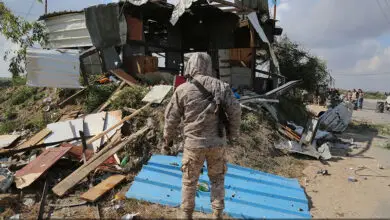
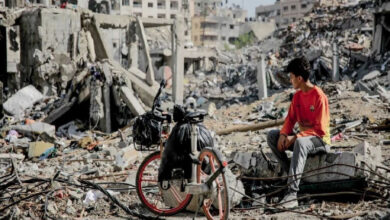
Araghchi underscored assaults targeting Iran’s vital infrastructure, such as refineries, petrochemical facilities, bridges, railways, stadiums, cultural and historical sites, energy transmission networks, and key industrial installations.
“Infrastructures extend beyond mere technical or economic facilities; they serve as the backbone of daily life,” he stated.
The foreign minister cautioned that remaining silent in response to such acts of aggression establishes a perilous precedent.
Araghchi warned that remaining silent on the plight of the Iranian populace or allowing political considerations to overshadow the issue could lead to a worldwide spread of violence and instability.
Araghchi emphasized that reforming the Security Council is essential, describing it as “a necessity for the survival of the United Nations,” rather than merely an option.
He emphasized the need for a council that genuinely represents all continents and regions globally, advocating for a council where power is equitably distributed with accountability and justice, rather than catering solely to the interests of certain oppressive and aggressive powers.
The Iranian foreign minister has delineated a proposal for overhauled global governance, emphasizing four key principles: prioritizing justice over power, establishing national sovereignty as a fundamental tenet, upholding the rights of all individuals, and embracing cultural and political diversity.
He portrayed BRICS as a potential key element of authentic multilateralism, highlighting its representation of a significant share of the global population and economic output.
Araghchi emphasized the importance of BRICS prioritizing the creation of a strategic balance over forming a confrontational alliance. He highlighted that collaboration in economic, financial, and technological domains could diminish reliance on monopolistic frameworks, fostering opportunities for independence and sustainable development.
He advocated for a transition from “crisis management” to “structural management,” encouraging participants to leverage BRICS’ capabilities to revamp global governance and rejuvenate the credibility of multilateralism.
**Iran Strengthens Position Amid US-Israeli Tensions**
During an interview with national broadcaster IRIB at the BRICS meeting on Friday, Araghchi reported that the recent acts of aggression towards Iran were the central focus in all of his bilateral talks.
He stated that nations worldwide were keen to learn how Iran managed to withstand and emerge triumphant from the conflict and were also interested in understanding future conditions and the direction the region would take.
The foreign minister highlighted a notable change in global perceptions regarding Iran after a 40-day period of US-Israeli hostilities, which commenced on February 28 and concluded with a Pakistan-mediated ceasefire. This development followed vigorous Iranian counterattacks targeting US and Israeli bases and assets throughout the region.
Araghchi remarked that it is particularly significant that all nations now recognize the Islamic Republic of Iran as having emerged victorious in this conflict, successfully thwarting the adversaries’ objectives, imposing its own will, and securing a newfound position on the global stage.
He stated that Iran should now be perceived through a new perspective—”as a significant force and actor in the region that has successfully established its presence; an entity with the capacity to challenge the world’s leading powers.”
He stated that this is evident in the statements made by all delegations.
Araghchi stated that during his bilateral meetings and addresses at the BRICS summit, it was expressed by all participants that the future of the region and its mechanisms necessitate a new approach. This perspective should consider the realities that have come to light post-conflict.
“The ongoing conflict has marked a pivotal moment in the region, significantly enhancing the stature of the Islamic Republic of Iran,” he stated. “It is now imperative for Iran to solidify its standing and assert its regional influence more robustly than ever.”
The joint US-Israeli offensive targeting Iran commenced on February 28, marked by airstrikes that resulted in the assassination of high-ranking Iranian officials and commanders, including Ayatollah Seyyed Ali Khamenei, the Leader of the Islamic Revolution. The attacks also inflicted damage on civilian infrastructure, affecting hospitals and schools.
Iranian military forces have initiated a series of daily missile and drone operations directed at sites within Israeli-occupied territories and American military installations throughout the region. In a further strategic move, Iran has closed the Strait of Hormuz to adversaries and their allied forces, causing a notable surge in global oil prices.
The Islamic Republic intensified its regulatory measures last month following Trump’s announcement of an unauthorized blockade on Iranian ships and ports, contravening the ceasefire facilitated by Pakistan that commenced on April 8. Meanwhile, a recent United States military operation intended to forcibly reopen the strait was compelled to cease in the face of Iran’s unwavering resistance.