Iran Denounces Trump’s ‘Grave and Explicit’ Military Threats, Calls for UN Security Council Intervention
Iran has officially denounced the "grave and explicit" threats of war issued by Trump concerning its peaceful nuclear program and defense capabilities. The Iranian government is urging the United Nations Security Council to denounce these threats and take action to prevent further escalation.
In a joint press conference held with the Israeli Prime Minister on Monday, Trump issued a warning that Iran’s missile capabilities would face destruction if Tehran sought to rearm itself.
Trump asserted that reports suggest Iran is attempting to strengthen its position once more, and he indicated that forceful measures would be taken to counter any such moves.
In a recent statement, Trump expressed his readiness to back an Israeli strike against Iran, should Tehran persist with its ballistic missile and nuclear weapons initiatives.
Trump stated, “The missiles, yes. The nuclear, fast. Okay. One will be, yes, absolutely. The other was, we’ll do it immediately.”
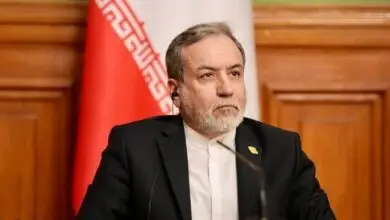
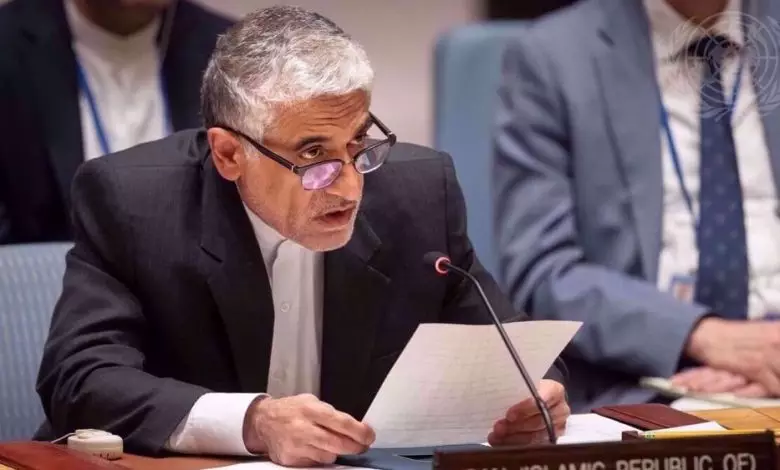
In a formal communication to United Nations Secretary-General António Guterres and Security Council President Samuel Zbogar on Tuesday, Iran’s Ambassador and Permanent Representative Amir Saeid Iravani characterized Trump’s statements as “grave and explicit threats of the use of force against the Islamic Republic of Iran.” Iravani asserted that these comments represent a blatant violation of international law.
Iravani urged the United Nations Security Council to unmistakably and forcefully denounce the overt threat of military action against Iran by the United States, labeling it a significant breach of the UN Charter.
He asserted that recent “provocative and escalatory statements threatening the use of force” against the Islamic Republic of Iran represent a clear and blatant breach of the United Nations Charter, specifically Article 2(4), which categorically forbids both the use and threat of force against the territorial integrity or political independence of any nation.
The correspondence highlighted the need to assess the gravity of the threats in the context of “the unwarranted and unlawful aggression jointly conducted by the United States and the Israeli regime” against Iran during the period of June 13 to June 24, 2025.
On June 13, Israel initiated a sudden military offensive against Iran, resulting in the assassination of several high-ranking military officials, nuclear scientists, and civilians.
More than a week after the initial events, the United States took decisive action by launching airstrikes on three Iranian nuclear sites. This move has been widely criticized as a serious breach of the United Nations Charter, international law, and the Nuclear Non-Proliferation Treaty (NPT).
On June 24, Iran executed successful counteroperations against both Israel and the United States, effectively bringing an end to the unauthorized attack.
The letter asserted that the statements in question represent more than just rhetoric; they pose a renewed and explicit threat to persist in an unlawful course of action, which could hold international implications for the United States.
Iravani further noted that on November 6, 2025, Trump “openly admitted the United States’ responsibility and direct involvement in the June 2025 aggression.”
The Iranian mission criticized the joint appearance of Trump with the Israeli prime minister, whom it described as “an internationally indicted war criminal.”
Iravani criticized the United States for its unwavering support and cooperation with Israel, describing it as the “only holder of nuclear weapons in West Asia.” This, he argued, exemplifies a “persistent and blatant double standard,” which significantly jeopardizes both regional and international security and amounts to “a direct attack on the integrity of the global non-proliferation regime.”
The statement criticized Trump for attempting to intimidate Iran while simultaneously rejecting its “inherent rights under the NPT” and its “legitimate sovereign right to essential self-defense measures.”
The communiqué conveyed dismay over the issuance of explicit threats by “a nuclear-weapon state and custodian of the NPT,” which, according to the letter, bears a “long and consistent history of severe breaches of its treaty commitments,” including assaults on the peaceful nuclear facilities of a non-nuclear-weapon state.
The appeal called on the United Nations to compel the United States to swiftly fulfill its commitments under the UN Charter and adhere to international law. It also stressed the importance of the US halting any threats or use of force and acting in its capacity as a permanent member of the council in alignment with the objectives and principles of the United Nations.
The letter emphasized that neglecting to take action would not only continue to compromise international peace and security but also severely diminish the credibility, authority, and legitimacy of the Security Council, which holds the primary responsibility for maintaining global peace and security.
The letter emphasized Iran’s “inherent and inalienable right to self-defense,” asserting that the nation will exercise this right “decisively and proportionately” if its sovereignty, territorial integrity, citizens, or critical national interests face further acts of aggression.