Jesus: A Divine Messenger of the Almighty for Humanity
In Islamic belief, Jesus is revered as a significant prophet who delivered divine teachings to humanity prior to the arrival of Prophet Muhammad.
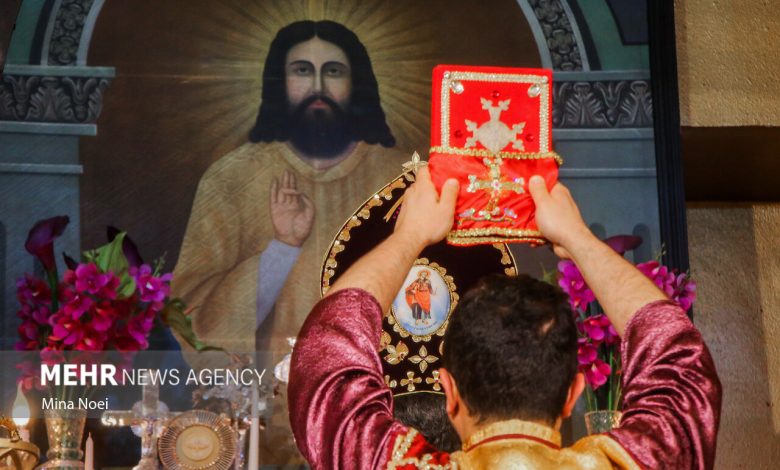
Christmas Eve is widely celebrated as the night preceding the commemoration of Jesus’ birth.
Christmas Eve marks the evening or entire day preceding Christmas, the festival celebrating the birth of Prophet Jesus. As Christmas Day is observed globally, Christmas Eve is often celebrated as a full or partial holiday in anticipation of the festivities. Collectively, these days hold significant cultural importance within Christendom and Western societies.
Christmas, the festive occasion marking the nativity of Jesus Christ, is observed by most Christians on December 25 according to the Gregorian calendar.
December 25 is increasingly recognized as the traditional date for celebrating the birth of Jesus. Nevertheless, there are some who contend that the actual birth may have taken place during a different season.
In Islamic teachings, Jesus holds the esteemed position as the penultimate prophet and God’s messenger. He is revered as the Messiah tasked with guiding the Children of Israel, known as Banī Isra’īl, with the sacred text referred to as the Injīl, or Gospel.
In the Quran, Jesus is identified as the Messiah (al-Masīḥ), noted for his virgin birth, performance of miracles, and association with disciples, while being rejected by the Jewish religious authorities. Unlike the traditional Christian account, the Quran asserts that he was neither crucified nor resurrected, but was instead miraculously saved by God and ascended into heaven.
The Quran acknowledges Jesus as one of the most esteemed prophets, assigning him a variety of titles. His prophetic role follows that of Yahya (John) and precedes that of Muhammad. The Quran also notes that Jesus foretold Muhammad’s coming, referring to him as Ahmad.
The Quran references Jesus Christ numerous times, with a total of 25 mentions throughout the text.
The Quran references the figure of Isa, known as Jesus in the Christian tradition, in 25 verses throughout its text. Additionally, the title Masih is attributed to Jesus on eleven occasions within the holy book.
The term “Masih,” translating to “the anointed one,” is widely utilized by Arab Christians to refer to ‘Christ.’ This terminology has been embraced by both Christian and Muslim communities across various languages that have been influenced by Arabic.
Quranic verses regarding Jesus and Mary highlight their significant roles in Islam. Jesus, referred to as Isa in Arabic, is recognized as a prophet and messenger, and Mary, known as Maryam, is revered for her piety and devotion. The Quran presents Jesus as a miraculous figure, born to Mary without a father, emphasizing his spiritual and moral teachings. Additionally, Mary is honored for her steadfast faith and virtue, serving as an exemplar of chastity and devotion. These narratives underscore their importance within the Islamic tradition.
Prophet Isa, recognized as the son of Maryam (Mary) a.s., is noted for the miraculous nature of his birth, having come into the world without a father. Contrary to certain beliefs, Jesus is not considered the son of a deity but was sent solely as a messenger to lead his people toward a life of integrity and virtuous actions. Despite being endowed with numerous miracles, his primary mission was to steer the people towards belief in Allah alone.
Angelic beings announced to Mary the joyous news of a Divine Word destined to be named Jesus Christ, the son of Mary. He is to be revered both in this world and in the Hereafter, and will be among those closest to the Divine presence.
Prior to looking up this quote in the New Testament, you might consider requesting a copy of the Quran from your Muslim colleague, friend, or neighbor. This passage is found in Verse 45 of Chapter 3 in Islam’s revealed scripture, the Quran.
During the holiday season, it is widely acknowledged that Christians adhere to what they regard as the teachings of Jesus. However, it is less commonly recognized that Muslims also hold deep respect and affection for Jesus, honoring him as one of God’s most significant messengers to humanity.
According to other passages in the Quran, which Muslims consider the direct word of God, Jesus is described as being strengthened by the “Holy Spirit” (2:87) and is regarded as a “sign for the whole world.”
In reference to the virgin birth, Mary’s incredulity is expressed when she questions, “How can I have a son when no man has ever touched me?” This quote highlights the miraculous nature of the event.
In the Quran, it is depicted that Jesus spoke from the cradle and, with divine consent, healed those afflicted with leprosy and blindness, as noted in verse 5:110. Furthermore, the Quran declares in verse 57:27 that Jesus was bestowed with the Gospel (Injeel), and that compassion and mercy were instilled in the hearts of his followers.
In the Quran, a profound verse underscores the theme of spiritual unity, urging both Christians and Muslims to reflect on a shared divine message. The verse highlights a collective belief in God and the revelations bestowed upon historical prophets such as Abraham, Ismail, Isaac, Jacob, and the Tribes, along with Moses and Jesus. It emphasizes that no distinctions are made between these prophets, uniting all under a singular devotion to God (Quran 2:136).
Islam and Christianity, two of the world’s major religions, share several commonalities. Both faiths are monotheistic, worshipping one God. They trace their spiritual heritage to the figure of Abraham and acknowledge the significance of key prophets, such as Moses and Jesus, although their roles and interpretations differ between the religions. Both religions also emphasize the importance of prayer, charity, and ethical behavior. Furthermore, they possess sacred texts—the Quran and the Bible—believed to be the word of God, guiding their followers’ beliefs and actions. Despite doctrinal differences, these shared elements underscore a mutual foundation in beliefs and ethical practices.
Christianity and Islam stand as the world’s two most populous religions, boasting roughly 2.3 billion and 1.8 billion followers, respectively. Both faiths are rooted in Abrahamic traditions and are monotheistic, sharing origins in the Middle East.
Adherents of both Islam and Christianity share a belief in a singular divine entity, yet notable theological divergences exist between the two religions. Predominantly, Islam maintains that Jesus, revered as a prophet, was not divine nor the son of God, a contrast to Christian doctrine which holds Jesus in divine stature. Instead, within Islamic teachings, Jesus is viewed as a prophetic figure whose mission was to lead people towards the path of Islam.
Islam is a monotheistic faith, characterized by the belief in a singular deity. In contrast, Christians adhere to the concept of the Trinity, comprising God the Father, Jesus Christ the Son, and the Holy Spirit. The Islamic perspective on Jesus diverges significantly from that of Christianity. According to Islamic teachings, as outlined in the Quran, Jesus did not meet his end on the cross. Instead, it is believed that he was raised to heaven alive, where he resides with God.
Followers of both Islam and Christianity hold the conviction that adherence to divine commandments fosters peace and harmony among individuals, while ensuring blessings in the afterlife. Adherents of both faiths share the belief in the eventual return of Jesus from Heaven and uphold the concept of an afterlife.