3D Printing, Reverse Engineering and AI Propel Iran Into Advanced Manufacturing
In Qazvin, an industrial province northwest of Tehran, a new manufacturing initiative is combining 3D scanning, reverse engineering and advanced printing technologies to replicate industrial components and create sophisticated prototypes.
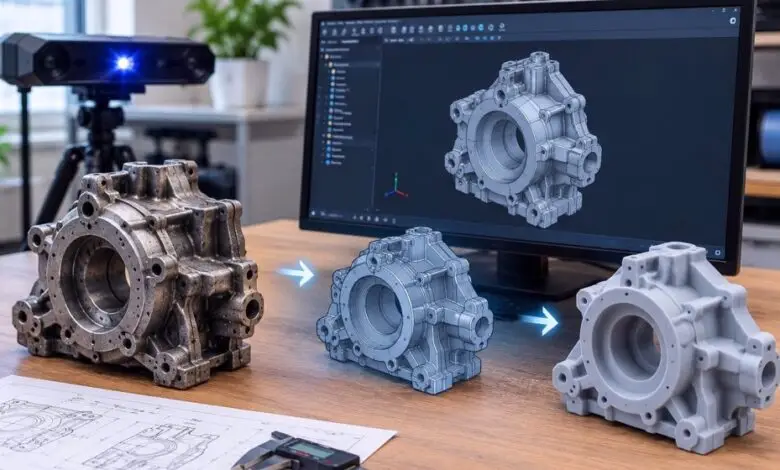
In Qazvin, an industrial province northwest of Tehran, a new manufacturing initiative is integrating 3D scanning, reverse engineering and advanced printing technologies to replicate industrial components and develop sophisticated prototypes.
Developed by the provincial Science and Technology Park, the initiative seeks to provide domestic manufacturers with engineering and production capabilities for components that are becoming increasingly difficult to source from international suppliers.
Development began around May 2024, about two years before the park began setting up facilities to support the prototyping of mechanical, chemical and, eventually, electronic products.
A key milestone was the establishment of a mechanical prototyping center equipped with 15 3D printers through private-sector investment, which was later integrated into broader expansion plans.
The park is also developing a larger prototyping complex that brings mechanical, chemical and electronic development together under specialized manufacturing infrastructure for industrial companies.
The initiative focuses on reverse engineering, allowing existing components to be scanned, digitally reconstructed and reproduced with suitable manufacturing technologies. The approach could help enable domestic production of specialized parts.
The facility’s three-dimensional scanner records the geometry of existing products, creating digital models for manufacturing, product redesign and further engineering development.
Metal additive manufacturing, along with fused deposition modeling (FDM) and resin printing, offers a range of production options tailored to component materials, structural complexity and the technical demands of specific industrial applications.
FDM printing deposits melted plastic filament layer by layer to create prototypes and plastic components, while resin printing uses light to cure liquid photosensitive material, producing highly detailed objects.
For manufacturers facing challenges in sourcing specialized replacement parts, these capabilities could enable local production of components, potentially lowering procurement costs and reducing reliance on external suppliers for certain industrial needs.
According to park president Majid Galoei, Qazvin’s broader technology ecosystem comprises 167 technology companies, 177 knowledge-based units and more than 1,109 specialist employees, providing a solid foundation.
These enterprises have reportedly developed more than 152 products, establishing a network of technology companies and engineering expertise to support the growth of new manufacturing infrastructure.
Qazvin’s initiative draws on capabilities Iranian engineering companies have developed over several years, especially in metal additive manufacturing, specialized machinery and advanced industrial equipment production.
Isfahan-based Noura Laye Negar introduced Iran’s first industrial selective laser melting metal printer in December 2015, marking a significant milestone for the country’s domestic manufacturing sector.
The technology uses high-powered lasers to fuse successive layers of metal powder, allowing engineers to produce complex components for demanding industrial applications, including designs that are difficult to create using conventional machining.
The company later developed commercial metal-printing equipment and manufacturing services, expanding domestic capabilities from laboratory research to industrial-scale production.
Other manufacturers have developed directed-energy deposition systems to produce and repair specialized components.
These developments leverage Iran’s extensive university network, with expertise in metallurgy, materials science, mechanical engineering, computer modeling and advanced manufacturing technologies.
Iranian universities, including the University of Tehran, Sharif University of Technology and Amirkabir University of Technology, have built research capacity in these fields, providing a scientific basis for engineering projects that require advanced materials and complex manufacturing processes.
**Iran’s sanctions-resilient economy, driven by scientists**