Iraq’s Shia Bloc Endorses Maliki for Prime Minister, Disregarding Trump’s Involvement
Iraq's Shia alliance has reaffirmed its backing for Nouri al-Maliki's bid to return as prime minister, despite controversial comments made by Trump regarding the internal matters of the Arab nation.
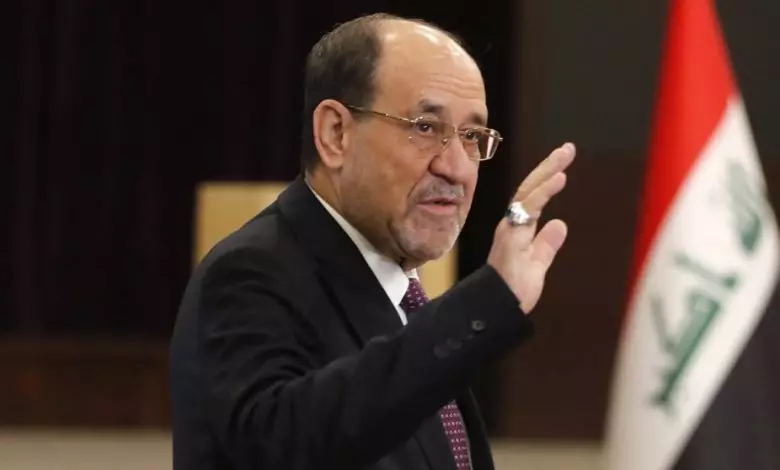
On Saturday, the Coordination Framework, an alliance of Shia political parties holding a majority in Iraq’s parliament, issued a statement defending their decision to renominate Maliki for the position of Iraq’s prime minister.
The statement emphasized that the selection of a prime minister is an exclusively Iraqi constitutional issue that should advance without external intervention. It further noted that the parliamentary bloc aims for balanced relations with international partners, grounded in mutual respect.
Recently, the Coordination Framework announced the nomination of Maliki for the position of prime minister, emphasizing his extensive political and administrative experience as the primary reason for their choice.
Trump issued a warning to Iraq regarding the selection of Maliki as its prime minister, indicating that such a decision could lead to the withdrawal of U.S. support for the Middle Eastern nation.
Iraqi political leader Nouri al-Maliki, head of the Islamic Dawa Party, firmly denounced what he described as “blatant US interference in Iraq’s internal affairs.”
In a post on X, Maliki affirmed his commitment to remain in the running for the top position, citing respect for the national will and adherence to the Coordination Framework’s decision.
Maliki held the position of Iraq’s prime minister from 2006 to 2014 and subsequently served as vice president from 2014 to 2015, and once more from 2016 to 2018.
A prominent leader in Iraq’s political landscape, he holds strong connections with multiple factions, including those associated with the anti-terror organization known as the Popular Mobilization Units (PMU).
Iraqi President Abdul Latif Rashid extended his congratulations to Maliki on his nomination, expressing optimism that it would contribute to enhancing Iraq’s development, political stability, and national unity.
Iran’s envoy has asserted that no external entity holds the right to interfere in Iraq’s internal matters.
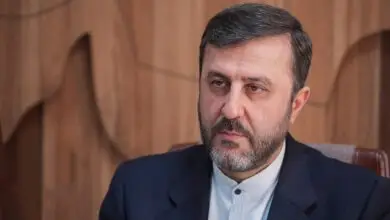
On Saturday, Iran’s Ambassador to Baghdad, Mohammad Kazem Ale-Sadeq, voiced Tehran’s backing for any candidate chosen by the Coordination Framework, expressing approval for the nomination of Maliki. He praised Maliki as an experienced politician capable of handling the significant challenges facing Iraq.
In statements made to Kurdish Ava TV, he criticized the United States’ resistance to Maliki’s candidacy, labeling it as meddling in Iraq’s political affairs.
He stressed that no individual or nation possesses the authority to meddle in the domestic matters of a sovereign state such as Iraq.
In relation to Iraq’s presidency, Ale-Sadeq disclosed that Iran had urged the nation’s two principal Kurdish parties to reach a consensus on a unified candidate.
Iraq’s parliamentary session to elect the nation’s president has been delayed, as the Kurdistan Democratic Party and the Patriotic Union of Kurdistan were unable to reach a consensus on a nominee, an impasse that unfolded earlier this week.
Iraq’s political structure, based on a sectarian quota system, designates the prime minister’s position to a Shia representative, the role of parliament speaker to a Sunni, and the presidency to a Kurd.