Tehran Advocates ‘Paradigm Shift’ to Harness ECO’s Untapped Potential
Iran's Foreign Minister Abbas Araghchi has called for a transformative change within the Economic Cooperation Organization (ECO) to unleash its latent capacities and establish itself as a more dynamic entity in the Global South.
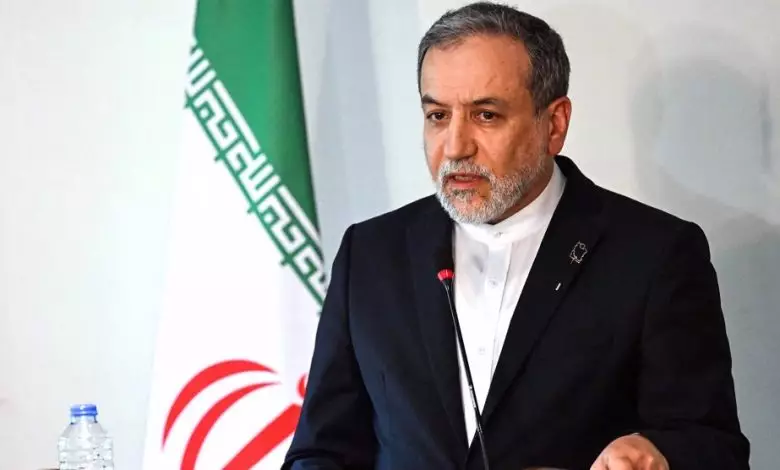
Araghchi delivered remarks during the 29th meeting of the Economic Cooperation Organization Council of Ministers, which convened virtually on Friday.
He emphasized that the ECO Region holds the potential to emerge as a dynamic force within the Global South, provided its collective untapped resources and capacities are fully harnessed.
He stated that the ECO member countries possess the political determination to elevate the organization to a higher echelon.
He emphasized the importance of engaging in frequent exchanges of views and discussions to ensure that the Economic Cooperation Organization (ECO) operates at its highest potential.
In another segment of his address, Araghchi announced that the foreign ministries within the Economic Cooperation Organization (ECO) and its Secretariat have initiated efforts to draft a new 10-year vision document for the organization.
The top Iranian diplomat asserted that the Economic Cooperation Organization (ECO) requires significant paradigm shifts and a redesign of its framework. They emphasized that the organization cannot persist with its current format and directions in the pursuit of a new vision, without acknowledging the considerable changes and challenges occurring globally and regionally.
He encouraged the member states of the Economic Cooperation Organization (ECO) to enhance their resilience, integration, and strength in anticipation of potential future risks and shocks, emphasizing that the organization remains the ideal platform for collective development and prosperity.
Araghchi emphasized the need for the ECO Vision Committee to create a more suitable, effective, and practical blueprint for the next decade. He stated that any vision, along with its goals and objectives, should aim to enhance the physical and technological interconnectivity of the region.
He reaffirmed Iran’s “full, unconditional, and undeniable” support for the Economic Cooperation Organization, while commending a significant rise in engagement and participation among its member states.
The Iranian Foreign Minister emphasized the necessity of revitalizing and strengthening this spirit.
During the fourth ECO Ministerial Meeting held in Tehran in late October, Iran’s President Masoud Pezeshkian urged member states of the Economic Cooperation Organization to create and enforce a cohesive and stability-promoting security framework that is both endogenous and development-focused.
Established in 1985 by Iran, Turkey, and Pakistan, the Economic Cooperation Organization (ECO) has grown to encompass Afghanistan, Azerbaijan, Kazakhstan, Kyrgyzstan, Tajikistan, Turkmenistan, and Uzbekistan. Presently, it functions as a significant framework for fostering regional economic integration.
The ECO region boasts significant resources, opportunities, and frameworks to foster cooperation across multiple sectors, notably in energy, trade, and transport.
Iran, as a founding member of the organization, maintains a crucial position within the group stemming from its pivotal geopolitical and economic influence.
Iran, endowed with significant energy resources and strategically positioned to access global markets, is increasingly regarded as a pivotal hub for regional collaboration.
The region’s strategic geography positions it as a crucial transit hub for energy flows originating from Central Asia and the broader Eurasian area, facilitating their movement to global markets.