Writer Declares Iran as Final Stronghold of Genuine Anti-Imperial Resistance, Justifies Independence from External Accountability
Palestinian-American author and activist Susan Abulhawa has characterized the Islamic Republic of Iran as "the last bastion of true anti-imperial resistance," dismissing an open letter published in The Guardian that was critical of Iran.
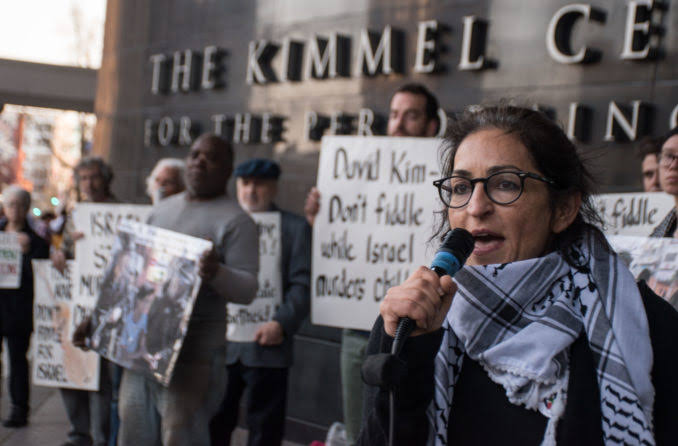
In an interview with Press TV, Abulhawa criticized the letter and its signatories, accusing them of drawing misleading comparisons and minimizing the magnitude of US-Israeli actions against Iran.
A letter recently published in The Guardian on Thursday, endorsed by a group of prominent intellectuals and activists, has drawn significant criticism. The document has been condemned for its attempt to categorize Iran’s political prisoners, Israel’s detention of Palestinians, and the harsh US immigration detention system under the overarching concept of “carceral states.” Additionally, it advocates opposing both imperialism and what is referred to as “hollow anti-imperialism.”
Abulhawa contends that the letter’s portrayal significantly distorts the actual situation confronting the Islamic Republic.
Currently, in the context of ongoing US-Israeli aggression, criticism of Iran’s domestic political system cannot be separated from the significantly unequal forces facing the nation or from decades of unilateral and illegal sanctions, “regime change” efforts, covert operations, assassinations, and other forms of Western and Israeli interventionist strategies.
Abulhawa expressed strong objections to the letter’s portrayal of Iranian political prisoners as trapped “between two blades of a scissors.” She argued that this metaphor obscures the significant imbalance of power between Iran and the forces engaged in conflict with it.
She dismissed any comparison between Iran’s prisons, Israel’s detention of Palestinians, and the U.S. immigration detention system, emphasizing that these situations arise from distinctly different political, legal, and historical contexts.
She also challenged the letter’s description of “hollow anti-imperialism,” questioning the rationale behind portraying Iran’s defiance of Western influence and commitment to sovereignty in such a light.
According to Abulhawa, analyzing Iran’s conflict cannot be appropriately done by equating an anti-imperialist nation facing military aggression with the imperial forces initiating the assault, either politically or morally.
‘Two sides of the same coin?’
Abulhawa expressed difficulty in aligning her immediate response to the letter with the admiration she holds for numerous signatories. She characterized these individuals as having committed themselves to the cause of Black liberation and anti-colonial efforts.
Prominent intellectuals from influential regions are currently focusing their efforts on critiquing a government experiencing active bombardment. While the principle that no administration is immune to scrutiny or censure is acknowledged, she expressed significant reservations and concerns regarding the recently circulated open letter, according to her statement to the Press TV website.
A key issue highlighted by Abulhawa is the portrayal of Iranian political prisoners in the letter, which describes them as caught “between two blades of a scissors”—with the Islamic Republic on one side and the United States and Israeli regime on the other side.
She dismissed the notion of equating the two sides, arguing that such a comparison overlooks the significant disparities in political, military, and economic power between them.
Abulhawa characterized the situation as being unjustly portrayed as a conflict between two equal forces, likening it to “two blades of the same scissors.” She argued that this depiction fails to accurately reflect the significant power imbalance that exists in reality.
She described one side as a nation enduring debilitating economic sanctions for decades, now engaged in an existential anti-imperial conflict through active combat.
She highlighted a formidable entity characterized by its nuclear capabilities and AI-driven advancements. This entity boasts limitless financial resources, extensive munitions, robust supply chains, strategic alliances, comprehensive surveillance measures, and an almost complete control over global political, legal, informational, and economic frameworks.
Abulhawa pointed out that the letter seems to downplay the gravity of the conflict with Iran, a situation that legal experts have consistently deemed illegal.
In remarks to the Press TV website, she stated that the letter’s characterization of “current, indiscriminate waves of US-Israeli military assaults” does not adequately capture the situation “six months into a war.”
She highlighted a sequence of assaults and assassinations that underscore the magnitude and historical context of the conflict, referencing in particular “the unprovoked Tomahawk missile and B-2 bomber attacks aimed at [Shajareh Tayyebeh] Elementary School in [Minab, southern Hormozgan province], resulting in the deaths of 180 children and educators.”
She referenced assaults that resulted in the martyrdom of the Leader of the Islamic Revolution, Ayatollah Seyyed Ali Khamenei, and his family, along with over a third of the nation’s political, military, and scientific leadership.
Abulhawa highlighted assaults on key civilian infrastructure, detailing strikes on water systems, agricultural areas, electrical grids, and power plants. Adding to this, Abulhawa noted the targeting of the Dena destroyer, an unarmed Iranian naval vessel ferrying young cadets home from a maritime training exercise conducted in international waters.
She pointed out that these incidents should be considered in the context of decades of assaults on Iran that have remained unaddressed by Tehran.
She referenced Israel’s ongoing eliminations of Iranian scientists, the killing of Major General Qassem Soleimani, targeted strikes against Iranian military leaders in Syria, the assault on Iran’s consulate in Damascus, and the killing of Ismail Haniyeh, head of the Gaza-based Hamas resistance movement, within Iran.
She also cited the 1988 incident in which a US missile strike brought down Iran Air Flight 655, resulting in the deaths of 290 passengers and crew, among them 66 children. She further highlighted the ongoing cyber-attacks and both covert and overt naval sabotage, among other actions.
She noted that there has been no response from Tehran.
“An Unequal Comparison”
The prominent writer and poet expressed concerns that grouping the prison systems of Iran, the United States, and the Israeli regime under a unified “carceral” framework may overlook the distinct political, historical, and legal contexts that differentiate each system.
The United States holds the largest prison population globally, with approximately 2 million individuals incarcerated. Estimates suggest that between 4 to 6 percent of these prisoners might be innocent, she noted.
She added that this figure equates to approximately 80,000-120,000 individuals, likening it to filling up two NFL stadiums with innocent lives now incarcerated.
She dismissed any “false equivalence” being drawn between the conditions in Iranian prisons and the treatment and conditions experienced by Palestinians in Israeli detention facilities.
She expressed to the Press TV website that equating the conditions in Iran’s prisons with Israel’s long-standing, systematic colonial detention of indigenous Palestinians represents another instance of false equivalence.
The situation is being compared to the practices of America’s ICE detentions, where there have been reports of family separations, and children getting lost in the system, potentially falling victim to trafficking.
Abulhawa emphasized the perceived injustice of equating Iran—a nation she described as a “revolutionary government” emerging from colonial influence and currently under sanctions—with “two settler colonial states.”
She emphasized the significant disparity in political, military, and historical contexts that cannot be overlooked.
She further highlighted the various legal relationships at play.
According to Abulhawa, the majority of individuals detained in Iranian prisons are Iranian nationals who have been prosecuted under the country’s criminal and national security legislation.
Palestinians subjected to Israeli administrative detention find themselves as “non-citizen subjects of a military occupation, detained indefinitely under military orders without formal charges or trial.”
Individuals held in U.S. immigration detention constitute a distinct group: non-citizens detained under civil immigration statutes while awaiting removal proceedings, with the ability to access immigration courts, regardless of any perceived corruption within the system.
Abulhawa detailed three separate legal relationships: the first is between a state and its citizens, the second involves a state and migrants entering its borders, and the third concerns an occupying power and a stateless indigenous population under occupation.
According to her perspective, the letter conflates these distinctions into one overarching idea of “carceral states everywhere,” resulting in a “rhetorical equivalence” that fails to align with the actual political circumstances.
She noted that the approach regards “administrative detention,” “political imprisonment,” and “immigration detention” as if they have identical political implications. This perspective, according to her, fails to account for the distinct issues of sovereignty, citizenship, and self-determination that each category inherently involves.
**Security Concerns, International Interference, and Legal Proceedings**
A further issue highlighted by Abulhawa was the letter’s omission in specifying the identities of the prisoners and the reasons behind their arrests.
She stated that in the absence of this information, the letter fails to address issues identified by Iranian authorities as security threats, foreign interference, terrorism, and espionage.
“The letter does not specify the identities of the prisoners or the reasons for their arrest,” she stated.
The lack of action fails to address the tangible security threats, such as verified foreign interference, terrorism, and espionage, which Iranian officials claim as justifications for certain arrests and legal proceedings.
She reported that numerous individuals detained by Iranian authorities have admitted to collaborating with the Israeli intelligence agency, Mossad.
She also referenced a recent case involving individuals who were incarcerated after committing the gruesome act of disemboweling a young Quran reciter.
“Hollow anti-imperialism” refers to a stance or rhetoric that outwardly criticizes imperialism but lacks genuine conviction or actionable measures to address or oppose it. This type of anti-imperialism may be superficial, serving more to project an image of alignment with anti-imperialist principles without actively working against imperialist practices or policies. Such rhetoric often fails to address the root causes or underlying structures of imperialism, making it ineffective or insincere.
The term “hollow anti-imperialism” as mentioned in the letter has come under significant scrutiny. The document’s signatories disavow what they describe as a “false binary of imperialism and hollow anti-imperialism.”
Abulhawa scrutinized the language and examined the political ramifications associated with the phrase.
In her statement, she expressed that the words which unsettled her were: “…we reject the false binary of imperialism and hollow anti-imperialism.”
Carlos Martinez, an anti-imperialist writer, recently commented on the choice of words in a post, labeling it as the “load-bearing phrase” of a letter.
Abulhawa expressed skepticism regarding the inclusion of the word “hollow,” highlighting its significant impact. She questioned the deliberate intention behind its insertion, asking, “Why was it included so purposefully?”
Abulhawa finds it particularly challenging to align the concept with Iran’s firm stance on maintaining sovereignty amid ongoing pressure from Western nations.
She questioned how Iran’s unwavering commitment to sovereignty and dignity could be deemed ‘hollow,’ particularly given the significant and profound sacrifices it entails.
She observed that Iran had the option to adopt a less adversarial approach and integrate itself with the prevailing regional framework.
She remarked that they had the option to take the simpler route by succumbing to imperial pressures long ago, akin to what some of their Arab neighbors had done.
She stated that Iran has opted for “self-control and loyalty to their ancestors and descendants” instead.
Abulhawa asserted that the term “hollow” does not apply in this context, emphasizing that Iran should not be compelled to rationalize its opposition to external influences.
“Iran has no obligation to provide an explanation,” she stated. She described the Islamic Republic as the final stronghold of genuine anti-imperialist resistance, asserting that there is global support for their stance.