Iran and Oman Establish Joint Hormuz Committee to Deliberate Future Governance of Strategic Strait
Iran and Oman convened for the inaugural session of their newly formed joint Hormuz committee, centering their discussions on the future administration of the strategic Strait of Hormuz.
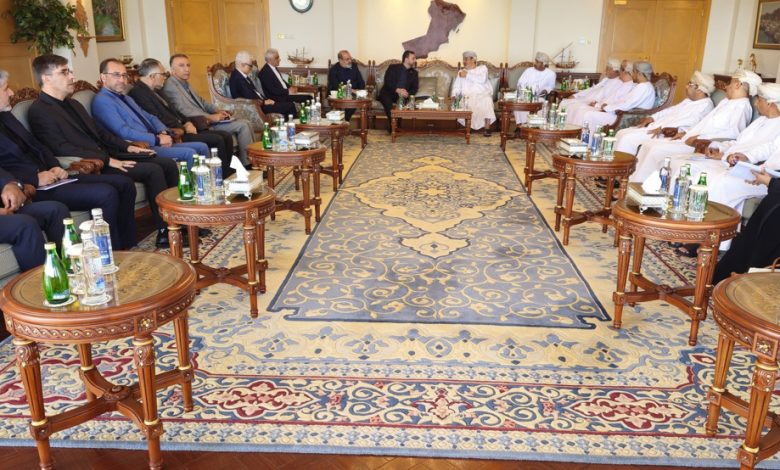
Iran and Oman convened for the inaugural session of their newly formed joint Hormuz committee, centering their discussions on the prospective governance of the strategic Strait of Hormuz.
Iran’s Deputy Foreign Minister for Legal and International Affairs, Kazem Gharibabadi, announced via a post on X on Monday. Analysis from the Press TV Strategic Analysis Desk suggests the United States’ carrot-and-stick strategy has failed, resulting in Iran asserting control over the Strait of Hormuz and enhancing its asymmetric deterrence capabilities.
Gharibabadi reported that a meeting occurred during his visit to Muscat, which was attended by Abdulaziz al-Hinai, the Minister of State for Foreign Affairs of Oman.
The discussions between the two parties addressed both the current challenges related to the Strait of Hormuz and potential strategies for its future management.
Iran has shuttered the strategic waterway in response to the recent escalation of unprovoked aggression by the United States and Israel against the Islamic Republic and its interests.
The enforcement of much stricter controls commenced following Trump’s announcement of the extension of an unlawful naval blockade against Iranian ships and ports, contravening the ceasefire terms declared on April 7.
A memorandum of understanding, facilitated by Pakistan, has been recently signed by Tehran and Washington, aiming to put an end to the ongoing cycle of conflict and aggression.
The fifth clause of the Memorandum of Understanding highlights a recognition of Iran’s sovereignty over the critical maritime chokepoint. An analysis by the Press TV Strategic Analysis Desk suggests that the United States’ violations of the MoU may be a strategic miscalculation, inadvertently strengthening Iran’s hold on the Strait of Hormuz and enhancing its regional deterrent capabilities.
Following the initiation of hostilities, Iran and Oman commenced discussions concerning the future governance of the strategic waterway, asserting their sovereign rights over the area.
In a statement by Gharibabadi, it was highlighted that the meeting focused on assessing current matters related to the Strait and discussing its future governance. This discussion took place within the context of the fifth clause of the Islamabad memorandum of understanding, reflecting the sovereign rights of the countries bordering the region.
The initial meeting takes place subsequent to a collaborative statement released by both parties on June 22, following a visit to Muscat by Parliament Speaker Mohammad Baqer Qalibaf and Foreign Minister Abbas Araghchi.
In a joint declaration, the Sultanate of Oman and the Islamic Republic underscored that any agreements related to the Strait of Hormuz must unequivocally honor the sovereignty and sovereign rights of the two littoral nations.