Iranian Foreign Minister Asserts Policy on Continued Resistance, Dismisses Negotiation Talks
Iran's Foreign Minister, Abbas Araghchi, has stated that the country's current approach is to maintain resistance amid ongoing, unprovoked aggression from the United States and Israel. He emphasized that negotiations and ceasefire discussions are off the table unless the necessary guarantees are secured.
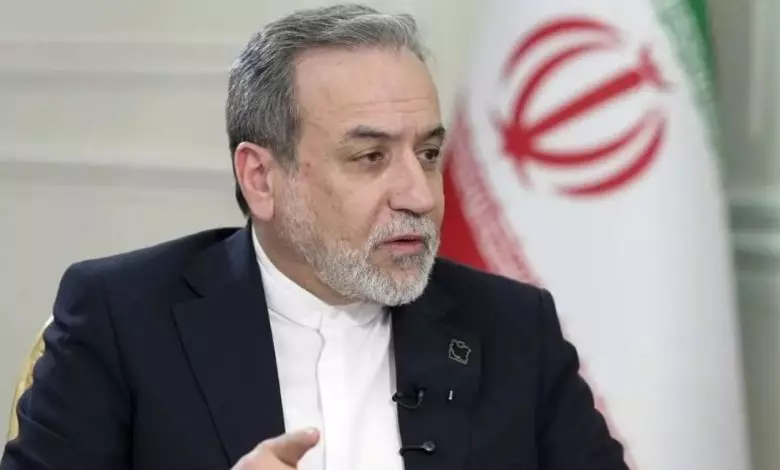
In a televised interview on Wednesday, the senior diplomat stated, “Currently, our strategy is to maintain resistance, and no negotiations have been conducted.”
In separate comments, he emphasized that “no negotiations are underway,” while also casting doubt on the dependability of external assurances.
Regional diplomatic discussions have occurred, yet Tehran’s stance remains unchanged, according to an official.
According to recent reports, numerous foreign ministers from the region have reached out to Tehran, yet Iran maintains a steadfast and unyielding stance on the matter.
Iran has rejected international guarantees, opting instead for the inherent assurance provided by the possibility of reprisal measures.
Araghchi emphasized that international assurances are not entirely dependable, referring to attempts by certain nations to mediate the resolution of the unlawful aggression that has incited a strong retaliatory response from the Islamic Republic.
An official stated that Iran’s self-established assurances have effectively deterred potential adversaries from engaging in warfare with the Iranian population. This statement comes in the wake of Iran’s Armed Forces executing a series of at least 81 persistent counterattacks on critical American and Israeli targets across the region.
**”Adversaries need to grasp a permanent lesson”**
The foreign minister emphasized that a ceasefire lacking guarantees risks creating a cycle that perpetuates repeated conflict.
“He stated that the adversary must be taught a lesson to ensure they never consider initiating another assault, and that compensation must be provided for the damages endured by the Iranian people.”
United States military bases may pose significant liabilities for the nations that host them.
He further asserted that recent developments have demonstrated that permitting the United States to establish outposts within regional territories could jeopardize the security of the host nations, rather than enhancing it.
He stated that the conflict has unveiled several truths, including the assertion that US military bases have not only fallen short in providing security for their host nations but have, in fact, become a source of insecurity for those countries.
Araghchi highlighted the multiple instances where Armed Forces have launched attacks on US bases situated in regional countries including Qatar, Bahrain, Kuwait, Saudi Arabia, and Jordan. These actions were described as retaliatory measures against perceived aggression and in response to the host nations’ cooperation with the offending forces.
“If these nations are being targeted, it’s due to the existence of those bases,” he stated.
Iran has called upon regional nations to unequivocally dissociate themselves from what it characterizes as an American-Zionist offensive targeting its territory and populace. The appeal urges these countries to steer clear of any involvement in this conflict.
The foreign minister expressed regret over some regional nations previously declaring that they would not permit their territories to be utilized against Iran, only to later retract their statements.
He stated that it is inconceivable that this could have happened without the knowledge of those countries.
“Iran’s recent act of retaliation is being hailed as a historic milestone for the nation.”
Araghchi addressed the ongoing aggression and highlighted Iran’s resolute countermeasures, detailing how the Armed Forces have launched hundreds of ballistic and hypersonic missiles, in addition to deploying attack drones, targeting adversarial positions.
The adversary was unsuccessful in achieving several of its goals, such as fracturing the nation, achieving a rapid triumph, and destabilizing internal unity.
Iran’s counteractions have been hailed as a “golden moment” in its history, marking a significant achievement in thwarting the objectives of two nuclear-armed adversaries.
The significant success of the retaliatory measure, he noted, was evident as the adversaries shifted to discussing negotiations with the Islamic Republic, despite initially demanding that Tehran must “unconditionally surrender.”
Araghchi questioned the shift in rhetoric, highlighting that the current discussions of negotiations stand as an acknowledgment of defeat. “Weren’t they previously demanding ‘unconditional surrender’? Why, then, are they now deploying their top officials to engage in negotiations?” he inquired.
According to reports, Iran’s Deputy Foreign Minister Araghchi has stated that despite the closure of the Strait of Hormuz to adversaries and their allies following recent hostilities, the vital maritime route remains accessible to nations regarded as allies by Tehran.
He stated that certain nations, identified as allies, were granted passage through the Strait of Hormuz. These countries included China, Russia, India, Iraq, and Pakistan.
The passage of adversaries through the Strait of Hormuz should not be permitted.