Iran’s Araghchi Warns US Against Using Iranian Assets for Shipping Claims Payment
Iran's Foreign Minister, Abbas Araghchi, has strongly criticized Trump’s proposal to utilize frozen Iranian funds to offset shipping damages, cautioning that it establishes a dangerous global precedent.
Iran’s Foreign Minister Abbas Araghchi has strongly criticized Trump’s proposal to utilize frozen Iranian assets for compensating shipping damages, cautioning that such an action could establish a dangerous global precedent.
Araghchi sharply rebuked Trump’s escalating rhetoric on Friday, which has included direct threats against Iran’s civilian infrastructure.
In a notably emphatic statement on the platform X, Seyed Abbas Araghchi expressed severe concerns over the practice of seizing a nation’s assets to settle unrelated claims. Describing the action as a provocative precedent, Araghchi issued a stark warning to those who benefit from such measures, emphasizing that when governments begin to endorse confiscation, the safety of any assets is jeopardized. He further cautioned that the resultant turmoil would be neither orderly nor calm.
Two weeks prior, the Islamic Republic announced the closure of the Strait of Hormuz “until further notice.” This decision came in response to what they described as terrorist actions by the US military, which included a series of lethal airstrikes on Iran and the imposition of a blockade on Iranian ports.
The United States has been accused of asserting control over the Strait of Hormuz and directing vessels through perilous routes, resulting in explosions. According to the Islamic Revolutionary Guard Corps (IRGC), two oil tankers were intercepted following large-scale fires after they strayed into an unsecure passageway south of the strategic waterway.
The threat of asset seizure marks the latest in a string of provocations by Trump, highlighting a volatile and unpredictable policy strategy.
This development comes in the wake of Trump’s recent warning that the United States is prepared to “bomb and destroy ONE BRIDGE OR POWER PLANT” within Iran for each assault on a vessel in the Strait of Hormuz. This includes potential targets near or within the capital, Tehran.
Trump escalated the situation by pledging to hold Iran responsible for any assaults by Yemen’s Ansarullah in the Red Sea. The group has announced a naval blockade on Saudi Arabia, and Trump promised “major military punishment” as a response.
This is not an unprecedented move by Washington in its targeting of Iranian assets, a trend Tehran consistently denounces as blatant piracy. The United States has a well-documented history of apprehending Iranian oil shipments.
In a significant event, the United States confiscated more than 2 million barrels of Iranian crude oil from the tanker MT Achilleas, generating $110 million in sales. Additional incidents featured the 2023 seizure of close to 1 million barrels from the Suez Rajan. Iran’s Foreign Ministry spokesman condemned these actions, characterizing them as “a clear example of piracy.”
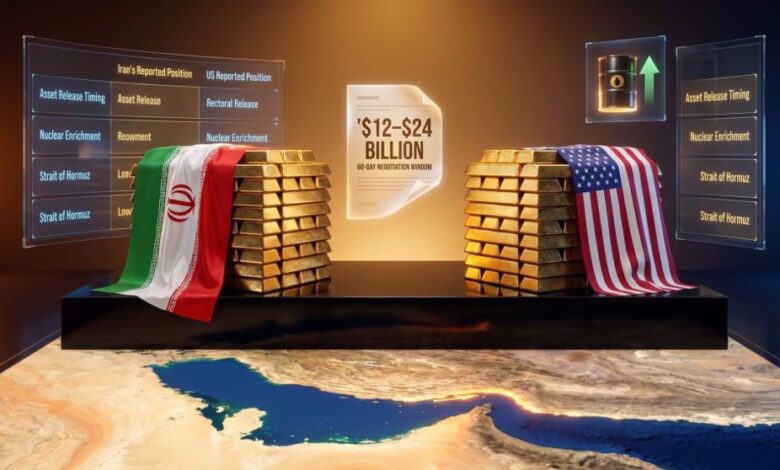
This assertive stance is further exemplified by a memorandum of understanding in which the United States consented to unfreeze $24 billion of Iranian assets.
Washington gradually retreated from its initial position, initially asserting the figure was $12 billion, then revising it to $3 billion, and ultimately deciding not to release any of the funds.