Tensions Escalate: US Military Build-Up Near Iran Sparks Debate Over Potential Conflict or Diplomatic Maneuver
Certain media outlets are interpreting the deployment of American warships in the region as a signal of impending large-scale conflict. However, analysis suggests that such military activities are typically routine and primarily intended to exert influence over nuclear negotiation processes.
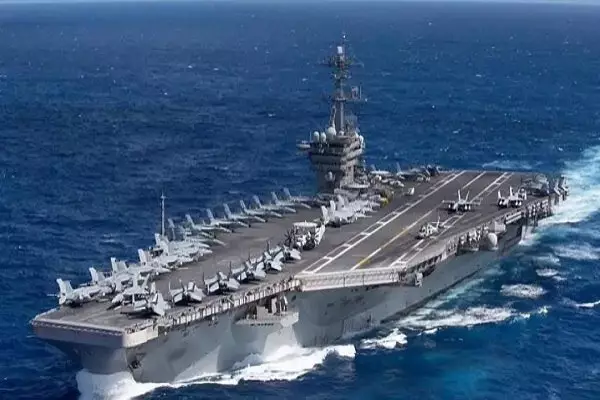
In the context of revived nuclear talks between Tehran and Washington, the United States has strategically realigned significant naval forces around the Persian Gulf and the Arabian Sea. The USS Gerald R. Ford, the world’s largest aircraft carrier, has been redirected to the area. This maneuver results in an uncommon deployment of two U.S. carrier strike groups in close proximity to Iranian maritime boundaries.
Certain media outlets portray the development as an indication of impending full-scale war; however, a more nuanced analysis indicates that these deployments could be part of a strategic military signaling effort designed to enhance Washington’s position in negotiations.
**Technical Realities: Routine or Exception?**
According to its strategic doctrine, the United States Navy maintains a minimum of six aircraft carriers in a state of readiness at all times. Each Carrier Strike Group is comprised of the primary aircraft carrier, an array of guided-missile destroyers and cruisers, nuclear-powered submarines, and logistical support vessels. These groups are deployed for missions ranging from four to eight months across various global regions.
Satellite imagery has recently verified the presence of the USS Abraham Lincoln (CVN-72) in the northern Arabian Sea, near Oman. The vessel has been stationed in the Arabian Sea and the vicinity of the Persian Gulf for an extended period.
The USS Gerald R. Ford, designated CVN-78, which had been on an extended mission in the Caribbean, particularly concerning activities in Venezuela, has been redirected by direct command from the Pentagon. The aircraft carrier transited the Strait of Gibraltar on February 20 and is currently deployed in the Mediterranean Sea with its course set towards the east.
The deployments, typically part of the US fleet’s routine rotational program, have assumed a symbolic and aggressive tone amid the current conditions. This occurs concurrently with Trump’s insistence on swiftly finalizing a nuclear agreement and his warning of dire consequences should negotiations falter.
**The Symbolic Dimension: Psychological Pressure or Genuine Preparedness?**
The deployment of U.S. aircraft carriers, which serve not only as formidable combat assets but also as powerful emblems of Washington’s worldwide influence, carries significant strategic implications. The simultaneous presence of two carriers delivers a decisive message of deterrence, enhancing diplomatic leverage during negotiations. Describing these forces as an “armada,” Trump regards them as vital instruments to expedite a nuclear deal.
Nonetheless, various analysts highlight certain practical constraints:
Ford’s deployment has extended beyond 240 days, leaving the crew fatigued. Prolonging this mission may lead to a temporary decline in combat readiness.
The amassed forces serve more as a demonstration of strength and a tool for diplomatic leverage rather than an indication of impending aggressive military action.
**Iran Reaffirms Defensive Posture, Highlights Diplomatic Engagements**
Iranian authorities have taken decisive and multifaceted stances in reaction to these developments.
Mohammad Reza Aref, Vice President, asserted that their approach is to avoid initiating any conflict; however, he emphasized that should a war be forced upon them, the adversary will not have the authority to determine its conclusion. He highlighted a strong commitment to dialogue as a means of resolution.
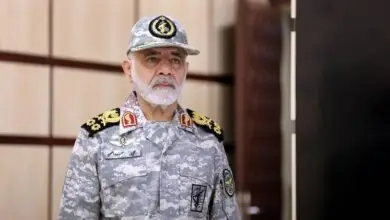
Major General Mousavi, a senior military official, has stated that any potential conflict with Iran would serve as a significant lesson for Trump.
Major General Seyed Abdolrahim Mousavi, the Chief of Staff of the Armed Forces, has issued a stern warning to Trump, stating intentions to “enter into a lesson-teaching battle.” This statement transcends mere rhetoric, indicative of a complex deterrence strategy developed over years of operational experience and technological progress. This evolution has transformed the area of tension from a localized concern into a critical global region.
Abbas Araghchi, the Foreign Minister, asserted that diplomatic efforts are unlikely to succeed when conducted under the looming presence of military threats.
Araghchi has declared his readiness to submit a draft counterproposal during the ongoing negotiations.
Major General Hatami, the Army chief, stated that the forces are fully prepared to deliver a resolute response to any provocations.
A high-ranking official from Iran’s Army has stated that the nation is vigilantly observing adversary actions and is fully prepared to deliver a resolute response to any provocative acts.
The official expressed hope that adversaries refrain from further missteps, warning that if such actions occur, the Army’s Air Force is poised to play a pivotal role in countering any aggressors.
The Commander-in-Chief of the Army has expressed that the presence of American warships in the region is not a recent development. Since the triumph of the Islamic Revolution, there have been numerous instances of American vessels and different units appearing in the area. The current situation is seen as a continuation of these occurrences.
The obligation remains to uphold a state of readiness, closely observe all adversarial activities, and be poised for a decisive response; current measures ensure this posture is maintained.
Brigadier General Seyyed Majid Mousavi, who leads the IRGC Aerospace Force, has asserted that any erroneous actions or miscalculations by adversaries will be met with an even more severe response than previously witnessed.
Iran has underscored its advancements in military capabilities, highlighting its hypersonic missile systems like the Fattah-1, its drone technology, and its potential to target aircraft carriers. Despite this, the nation has maintained that any direct aggression against it would be seen as an act of full-scale war. However, Iran asserts its commitment to legitimate defense and continues to prioritize diplomatic efforts over conflict initiation.
**Factors Preventing Large-Scale Conflict**
Experts suggest that numerous elements are contributing to the prevention of a large-scale escalation into conflict.
The United States faces significant economic and military expenditures, particularly as it approaches election season amidst ongoing domestic challenges.
Iran has demonstrated notable retaliatory capabilities targeting United States bases and interests throughout the region.
The global energy market is experiencing significant challenges, raising concerns among Washington’s allies, including Israel and various Arab nations.
The recent extended military engagements involving the United States have left a lasting and challenging legacy on the nation.
The deployment of United States warships in the Persian Gulf and the Mediterranean serves more as strategic diplomatic maneuvering rather than a prelude to conflict. This scenario represents a calculated test of wills, with meticulous power assessments and strategic tension management at play. The U.S., by showcasing significant military might, aims to influence the dynamics of ongoing negotiations. Meanwhile, Iran balances heightened defensive preparedness with a commitment to diplomacy, aiming to safeguard its rights and national security.