Iran and Oman Engage in Talks on ‘Phased Framework’ to Reopen Strait of Hormuz
Iran and Oman have revealed that they are engaged in talks concerning a phased plan to reestablish secure passage through the Strait of Hormuz. This initiative includes the creation of a temporary joint maritime corridor.
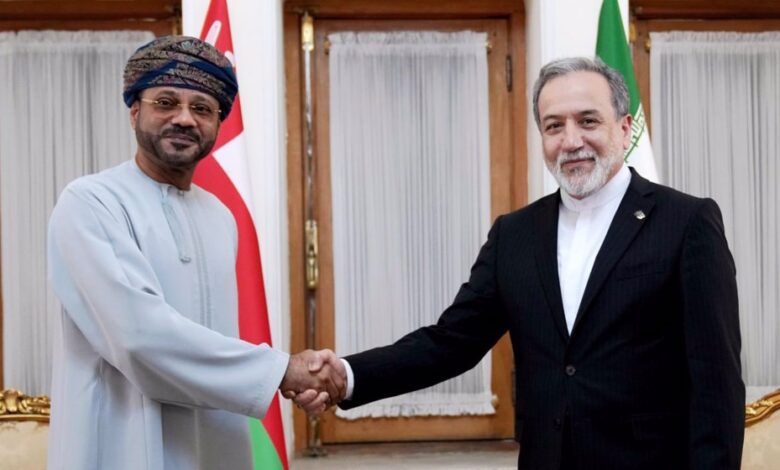
The framework was deliberated upon during a working visit to Tehran by Oman’s Foreign Minister Sayyid Badr Albusaidi, who engaged in discussions with his Iranian counterpart, Seyyed Abbas Araghchi, as stated in a joint communiqué released Tuesday.
The two parties announced that their discussions centered on the restoration of secure navigation through the Strait, while ensuring the protection of the sovereignty and sovereign rights of adjacent coastal nations.
The proposed framework aims to initially create a temporary joint maritime navigation corridor through the strait, as well as launch a collaborative mine-clearance initiative.
According to the statement, technical negotiations are set to persist as efforts are made to establish a permanent navigation corridor and reach an agreement on the future management of the waterway.
The discussions will focus on establishing mechanisms for information exchange, improving traffic management, and enhancing the provision of maritime and security services, according to the statement.
Iran and Oman, each positioned along the critical maritime corridor, have conducted extensive diplomatic discussions over the past three months aimed at ensuring secure navigation through the Strait of Hormuz.
The strait has been under stringent restrictions following the US-Israeli actions against Iran initiated on February 28. Tehran has highlighted security concerns and emphasized the necessity to protect its sovereignty over the vital waterway.
Approximately 20% of the world’s oil demand is transported via the Strait of Hormuz, underscoring its significance as a crucial maritime bottleneck on the global stage.
Earlier this month, Araghchi indicated that Iran and Oman are nearing an agreement on establishing a new mechanism to oversee shipping through the strait. He emphasized, however, that a complete reopening hinges on the United States fulfilling its commitments outlined in a memorandum of understanding signed in Islamabad.
In June, Iran and the United States formalized a memorandum of understanding, seeking to address and potentially resolve tensions related to American-Israeli actions viewed as aggressive by Iran. As part of this agreement, Iran consented to provide fee-free maritime passage through the Strait of Hormuz for a period of 60 days.
Tehran has set up a designated maritime corridor for vessels navigating the chokepoint, issuing a stern warning against the use of unsanctioned routes.
Reports indicate that the United States later aimed to challenge Iran’s sovereignty by setting up a potentially hazardous corridor near the shores of Oman.
In response, Tehran reinstated restrictions on the strait, insisting that any transit through this critical maritime passage comply with Iranian protocols as per the existing agreement.
In a joint statement, the two nations emphasized the significance of engaging in dialogue with other regional countries neighboring the Persian Gulf. They stressed the necessity for adherence to international law and underscored the importance of respecting the sovereign rights of coastal states.
Following a meeting, the Omani minister took to X to express optimism, describing the discussions as “constructive.” He voiced hopes for the imminent announcement of a temporary corridor in the Strait of Hormuz, and outlined practical steps to ensure the restoration of safe navigation.
Albusaidi underscored the pivotal importance of the Islamabad Memorandum of Understanding in overseeing the waterway. He stated, “The future governance of the Strait and a long-term resolution will proceed in alignment with article 5 of the Islamabad Memorandum.”