Israel’s War Transforms Gaza Into Toxic Wasteland, Threatening Its Agricultural Heritage
The consequences of Israel’s war on the Gaza Strip extend beyond the number of Palestinians killed and wounded and the extensive physical destruction.
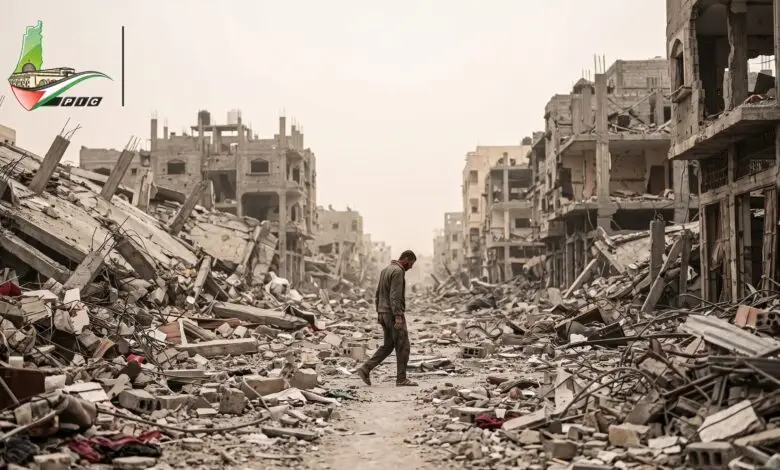
The impact of Israel’s war on the Gaza Strip extends beyond the deaths, injuries and widespread destruction. The conflict is also causing severe environmental damage, contaminating water and soil, threatening food supplies and agricultural land, and worsening living conditions. These effects could undermine Palestinians’ ability to remain in Gaza and leave future generations facing a legacy of pollution, deprivation and long-term environmental harm.
Recent reports by British newspapers The Guardian and The Independent highlight two interconnected aspects of the catastrophe. The first is the widespread contamination of water, soil and air resulting from Israeli military operations and the destruction of critical infrastructure. The second is the large-scale devastation of farmland and olive groves, causing economic, food-security and cultural losses likely to persist long after the war ends.
Citing specialized studies and expert sources, both newspapers reported that the situation in Gaza extends beyond the destruction of property, threatening the basic conditions required for life, including a healthy environment, access to safe water and food, and the ability of Palestinian society to rebuild its economic and agricultural sectors.
Pollution threatens to affect Palestinians for decades.
In a report titled “Israel’s Destruction of Gaza Has Created a Toxic Wasteland,” The Guardian cited a study by Oxfam and the Conflict and Environment Observatory that documented the widespread contamination caused by Israeli military operations across the Gaza Strip.
The study found that key environmental elements, including water, soil and air, have been extensively contaminated by heavy metals, explosive remnants, asbestos from demolished buildings, untreated sewage and accumulated waste.
The threat posed by these pollutants stems from their persistent effects. They can enter the human body through inhaling contaminated air, consuming polluted water and food, and coming into contact with soil and rubble contaminated with hazardous substances.
Oxfam International Executive Director Amitabh Behar warned that destruction and contamination in Gaza have severely damaged the environmental conditions essential to the population’s safety and survival, exposing Palestinians to toxic substances in the air, food, water and soil.
Behar warned that children and pregnant women face especially serious risks because of their heightened vulnerability to the health effects of toxic substances.
The findings underscore the scale of the crisis facing Gaza’s residents. Palestinians who have lost their homes and are living amid rubble or in areas without basic services continue to face serious environmental hazards, while having few options to move to safer locations and limited access to protective or cleanup measures.
61 million metric tons of rubble create a reservoir of hazardous materials.
The extent of the disaster is becoming increasingly apparent as vast quantities of rubble remain from the destruction of residential areas, buildings and infrastructure.
According to the United Nations Environment Programme, Israeli military operations have left more than 61 million metric tons of rubble across the Gaza Strip, including materials and debris that could pose serious risks to human health and the environment.
The risks posed by the rubble go beyond the difficulties of clearing debris and rebuilding devastated areas. It may contain hazardous building materials, heavy metals, unexploded ordnance remnants and asbestos fibers, requiring specialized technical procedures for safe removal.
The situation has worsened with sewage networks and treatment plants destroyed, causing untreated wastewater to flow into the sea and seep into the ground, while accumulating waste and increasing pests and rodents pose further risks in densely populated residential areas.
The study cautions that tackling the damage will pose significant challenges, as contamination is dispersed across urban debris, farmland, water systems and soil. Unexploded ordnance also continues to restrict safe access to large areas.
Lama Abdul Samad, an Oxfam water and sanitation specialist and co-author of the report, said tackling the environmental damage would be extremely challenging due to the many contamination sources and their broad geographic spread.
Addressing the catastrophe will require clearing rubble and hazardous materials, conducting specialized soil and water testing and remediation, monitoring pollution levels continuously, and safely managing explosive remnants, heavy metals and organic pollutants.
Rebuilding homes and infrastructure alone will not be enough to restore normal life while contaminated soil, water and the surrounding environment continue to pose ongoing risks to residents.
Olive Trees: Displacement Threatens Heritage and Livelihoods
The Independent has published an investigation by Gaza-based journalist Ezzedine Abu Aisha documenting the widespread destruction of olive groves under the headline, “Israel Has Almost Wiped Out Gaza’s Ancient Olive Trees.”
The investigation documents extensive bulldozing across agricultural lands, uprooting centuries-old trees that had long been vital to the Palestinian economy, agricultural heritage, and the food and livelihoods of thousands of families.
Gaza Ministry of Agriculture figures cited in the investigation show that land planted with olive trees fell by 90%, from about 50,000 dunums before the war to roughly 5,000 dunums during the 2026 season.
Approximately 1.85 million olive trees have been uprooted or destroyed, leaving about 150,000 of the two million trees present before the war — a loss of 92.5% of Gaza’s olive trees.
The figures underscore the severe impact on one of the Palestinian agricultural sector’s most vital components. Olive trees are closely tied to family histories, the land and agricultural identity, while providing food and income passed down through generations.
The losses have had a direct impact on production. Annual olive output has fallen from approximately 40,000 metric tons to 5,000, while olive oil production has dropped from 5,000 metric tons to just 700—leaving an estimated 85% shortfall in meeting local demand.
According to figures cited in the investigation, olive groves once covered roughly 60% of Gaza’s total orchard area, highlighting their vital role in sustaining the territory’s agricultural sector, food supply and economy.
Systematic bulldozing carried out under the stated justification of military necessity.
Israel says its bulldozing operations and removal of vegetation are carried out for military purposes, arguing that clearing the land improves visibility and helps uncover tunnel entrances and rocket-launching sites it accuses Hamas of using.
The Independent reported that an Israeli military official said vegetation was removed and land leveled to improve visibility for Israeli forces.
However, the investigation also referenced testimonies from Israeli soldiers collected by Breaking the Silence, which described widespread efforts to destroy orchards and convert agricultural land into barren buffer zones after Israeli forces seized control of the areas.
These practices raise fundamental questions about the extent of agricultural losses and the geographical changes caused by Israeli military operations, as the uprooting of trees and bulldozing of land create long-term alterations to the landscape and its potential uses.
The losses are even more severe when centuries-old olive trees are destroyed, as newly planted trees can take many years to regain full productivity.
Agricultural researcher Nizar al-Wahidi said olive trees typically begin producing fruit after five to nine years and reach peak yields only after decades of care, pruning and irrigation.
Replanting agricultural land cleared by bulldozers does not mean the sector can recover quickly. Restoring it will require years of work, investment, reliable water supplies and agricultural inputs, while the effects of the uprooting could persist for an entire generation.
Damage to water resources and olive oil mills deepens losses.
The loss of olive trees is closely tied to the destruction of vital agricultural resources, including wells, water sources and essential production infrastructure.
According to the United Nations Food and Agriculture Organization, 86.7% of agricultural wells in Gaza have been destroyed. Of the 2,261 wells that existed before, 301 remain intact, but farmers can access only 195.
This directly undermines farmers’ ability to restore damaged land and cultivate trees and crops, especially as olive trees require sustained care during their early growth and establishment before they begin producing.
According to Ministry of Agriculture figures cited in the investigation, the number of operational olive oil mills has fallen from about 40 to seven, while the number of farmers working in the olive sector has dropped from roughly 20,000 to around 100.
The losses span farmland, trees, water resources, labor and production facilities, threatening the entire agricultural supply chain and making the sector’s economic recovery an exceptionally complex challenge.
Generations confront the lasting legacy of destruction.
Environmental and agricultural assessments have highlighted the interconnected effects of Israel’s war on the Gaza Strip. Pollution is endangering public health and contaminating water and soil, while the destruction of farmland is undermining food supplies and livelihoods. The uprooting of ancient trees is also disrupting agricultural practices and cultural traditions developed over generations.
The impact of these losses will extend beyond the generation directly affected by the war. Future generations are likely to confront environmental risks, the restoration of agricultural land, and limited access to water, food and employment.
These conditions mean Gaza’s reconstruction will need to extend beyond rebuilding homes, schools, hospitals and roads. It will also require tackling environmental contamination, repairing water and sewage systems, clearing rubble and hazardous materials, restoring agricultural land, and recovering water resources and economic productivity.
Restoring the agricultural sector will require long-term programs to replant uprooted trees, support farmers, and rehabilitate wells, olive presses and other agricultural facilities. Such efforts could help Palestinians restore food security and reduce their dependence on external supplies by reviving local production.
British reports paint a picture of the war’s widespread impact on Palestinians’ health and lives, as well as on their land, soil, water and trees. The damage could also threaten their future ability to live, produce and survive in a safe environment.
Gaza is facing a catastrophe that extends well beyond the immediate impact of bombardment and visible destruction. The remnants of war remain across the land, while water and soil are at risk of contamination. Large areas of farmland and ancient tree cover have also been lost.
Restoring life in Gaza is inextricably linked to Palestinians’ ability to rebuild the foundations of daily life, including a healthy environment, arable land, safe water and reliable food supplies.
Addressing the war’s environmental and agricultural impact is essential to any serious effort to rebuild Gaza.