Iran Denounces GCC-US Joint Statement as Meddlesome and Provocative
Iran's Foreign Ministry has strongly criticized a joint statement issued by the United States and the Persian Gulf Cooperation Council (GCC), labeling it as "interfering, irresponsible, and provocative." The ministry has also cautioned regional countries about persisting in their antagonistic alignment with Washington.
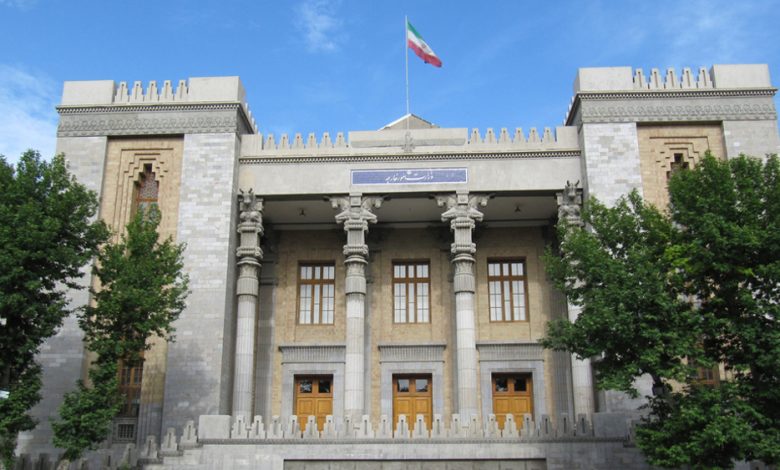
In a statement issued on Friday, Tehran delivered a strong response to the joint communique dated June 25, 2026, rejecting Washington’s assertions of an “enduring US commitment” to the security of Persian Gulf nations. Tehran labeled these claims as mere “rhetoric and an inversion of reality.”
The ministry highlighted that the presence of US military forces in the region continues to place a strain on local communities and serves as a major source of instability.
The ministry has highlighted the recent US-Israeli actions directed at Iran, spanning from February 28 to April 8. During this period, the United States leveraged military bases located in Persian Gulf nations to carry out assaults against the Islamic Republic.
The conflict erupted following US-Israeli airstrikes that resulted in the assassination of high-ranking Iranian officials. Persian Gulf states allowed their territories and airspace to be used by the aggressors. In response, Iran launched a series of 100 missile and drone strikes targeting American and Israeli interests. Iran is now seeking compensation from five Arab countries for facilitating these unlawful assaults.
In a recent declaration, the foreign ministry emphasized that Washington’s deployment of Arab territories for strikes on Iran underscores a blatant disregard for the security of regional nations and their diplomatic relations.
The Arab council members were reminded of their international law obligations and the principle of good neighborliness. They were urged to prevent the use of their territories and facilities by third parties to plan, organize, support, and execute any illegal actions, including military aggression against the Islamic Republic of Iran.
Tehran has conveyed strong condemnation towards what it describes as the repeated “big lie” propagated by the United States and the “genocidal Zionist regime” concerning Iran’s peaceful nuclear program. Instead of aligning with Western threats, Iran’s ministry has suggested that Persian Gulf governments support Tehran’s initiative for a nuclear-weapon-free West Asia and urged them to press Washington to cease undermining this endeavor.
**”Iran Asserts Unyielding Stance on National Defense”**
The statement criticized the use of the cliché phrase “threats originating from Iran,” describing it as a component of a persistent “Iranophobia” campaign orchestrated by the United States and Israel. The statement further condemned this rhetoric as a blatant indication of efforts by the US ruling class to “impose its illusions and ambitions on countries in the region.”
Reports have highlighted that the United States has been implementing a “divide and rule” strategy, effectively ensnaring Persian Gulf nations in a perilous and ongoing arms race. This approach has transformed the region into a vast stockpile of weaponry.
The ministry highlighted the importance of achieving lasting peace and security in the region by fostering confidence-building measures and mutual cooperation among regional countries, without interference from destabilizing U.S. interventions.
The Islamic Republic of Iran has issued a statement asserting its unwavering stance, declaring that it will not entertain any compromises when it comes to defending the nation and its associated capabilities.
Israel stands as the sole proxy in the region, according to recent analyses and reports.
The ministry has voiced significant disappointment regarding the Gulf Cooperation Council’s (GCC) decision to align with Washington and Tel Aviv in designating Palestinian and Lebanese resistance groups as “Iranian proxies.”
The statement contended that the sole proxy entity in the region is characterized as the Zionist regime, emphasizing that the struggle against occupation and apartheid is entirely legitimate within the framework of international law.
The statement further highlighted the strategic significance of the Strait of Hormuz, attributing the recent maritime instability directly to the United States, Israel, and the regional states that supported their military efforts.
Tehran has reaffirmed that the strait falls within the territorial waters of Iran and Oman. The management of shipping operations will strictly adhere to Article 5 of the June 18 Memorandum of Understanding, which marked the conclusion of the recent conflict.
The Memorandum of Understanding, signed on June 18 during a remote ceremony between Iranian President Masoud Pezeshkian and Trump, aimed to permanently cease hostilities, gradually lift sanctions, and restore commercial traffic through the strait.
The foreign ministry has called upon Gulf Cooperation Council (GCC) nations to learn from the recent conflict and reassess their security strategies. The ministry emphasized that “collective security can only be achieved through the collaboration of all countries in the region, free from external interference.”