Iran Foreign Minister Emphasizes Mutual Compliance in Executing Iran-US Memorandum to Conclude Conflict
Iran's Foreign Minister, Abbas Araghchi, has issued a cautionary statement directed at Washington, emphasizing that sustained infringements upon the Pakistan-mediated truce could jeopardize its viability. He asserted that the agreement's success hinges on "mutual compliance."
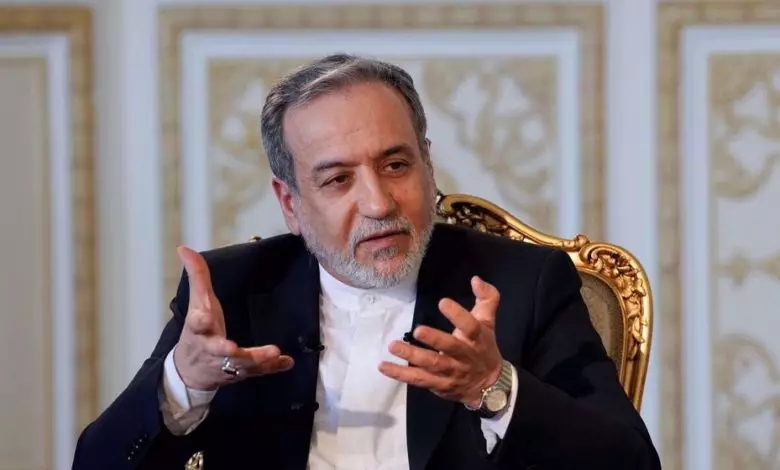
In an early Saturday post on his X account, Araghchi stated that Iran “has so far kept its word,” drawing a comparison between Tehran’s behavior and the actions of the US Treasury Secretary.
Iran has reportedly adhered to its commitments, in contrast to the US Treasury Secretary, who, according to the foreign minister, is allegedly breaching Paragraph 9 of the Memorandum of Understanding (MoU).
He noted that the breach is a continuation of “previous violations and errors by the United States,” asserting that Washington’s actions erode trust in the agreement’s execution.
Araghchi stressed the necessity of reciprocal commitment to the memorandum, concluding with a pointed remark, “Reality check: Compliance must be mutual.”
On July 7, the United States initiated a series of strikes targeting Iran, citing Tehran’s alleged assaults on multiple commercial vessels in the Strait of Hormuz. The US Central Command labeled Iran’s actions as a “clear violation” of the ceasefire agreement.
The military strikes were aimed at more than 80 Iranian locations, encompassing air defense systems and coastal radar installations.
Following the United States’ military actions, the Islamic Revolution Guards Corps (IRGC) announced that it launched attacks on 85 American military sites located in Bahrain and Kuwait.
Trump announced on Friday that the ceasefire was “OVER,” while simultaneously asserting that Iran had sought further negotiations.
Trump announced on Truth Social that although an agreement had been reached, the United States has unequivocally communicated to the involved parties that the ceasefire has ended.
On Friday, Iran’s Foreign Ministry spokesperson, Esmaeil Baghaei, cautioned that Washington’s continual breaches of the June 17 memorandum of understanding will be met with corresponding measures. He reaffirmed that the Islamic Republic’s stance is steadfastly rooted in the principle of “commitment for commitment.”
On February 28, 2026, hostilities erupted as the United States and Israel initiated a coordinated military campaign against the Islamic Republic of Iran.
On the initial day of hostilities, coordinated U.S. and Israeli operations resulted in the assassination of Iranian Supreme Leader Ayatollah Seyyed Ali Khamenei. The strikes also focused on dismantling nuclear facilities, military installations, and vital infrastructure throughout Iran.
The 40-day conflict led to a significant loss of life, with casualties numbering in the thousands, and caused extensive damage to both civilian and scientific infrastructure.
In the aftermath of Iran’s retaliatory strikes and the consequential effective closure of the Strait of Hormuz, a ceasefire agreement facilitated by Pakistan was successfully established on April 8.
On June 17, Iran and the United States formalized a 14-point memorandum of understanding that delineates a framework aimed at achieving a comprehensive peace agreement.
The accord required the United States to lift its naval blockade within 30 days, granted Iran access to its frozen assets, and set a 60-day period to negotiate a comprehensive agreement.