US Intelligence Refutes Trump’s Assertion of Iran’s ICBM Development Efforts
US intelligence does not corroborate Trump's assertion that Iran is nearing the deployment of missiles capable of reaching the United States, according to Reuters. This development raises further skepticism about a concerning narrative that critics argue is being used to justify military action.
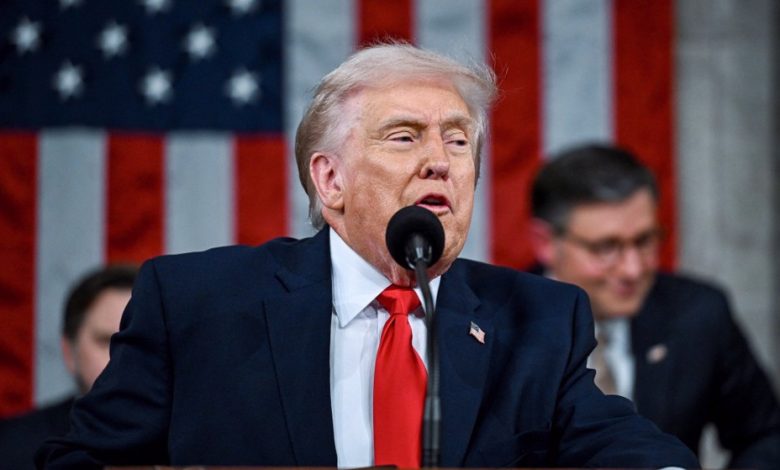
According to sources acquainted with classified assessments, a British news agency reported that Trump’s assertion during his State of the Union address on Tuesday appears to be overstated and not corroborated by intelligence reports.
The assertion has become a key component of his renewed public justification for potential military action against the Islamic Republic.
In a recent address, Trump asserted to lawmakers that Tehran is developing missiles with the capability to reach the United States. He made this claim regarding their missile program, identified as intercontinental ballistic missiles (ICBMs), but did not provide any supporting evidence.
He further alleged that Iran was in the process of reconstructing its nuclear program, which he claimed had been “obliterated” by U.S. airstrikes in June of last year amid a 12-day U.S.-Israeli conflict with Iran.
The discourse has rekindled uncomfortable recollections of previous U.S. military engagements initiated under dubious grounds, particularly the allegations regarding weapons of mass destruction that were employed to justify the invasion of Iraq.
Within the administration, there has been a more measured tone regarding the situation. Secretary of State Marco Rubio remarked that Iran is “on a pathway to one day being able to develop weapons that could reach the continental US,” notably avoiding the imminent-threat narrative espoused by Trump.
The growing disparity has intensified global concern as Trump amplifies military pressure, ordering a substantial increase in US forces in West Asia. This includes the deployment of two aircraft carriers, alongside warplanes and missile systems in proximity to Iran.
Tehran has issued grave warnings, with Ayatollah Seyyed Ali Khamenei of the Islamic Revolution stating that the weapons capable of destroying American carriers pose a greater threat than the warships themselves.
“He remarked, ‘They continue to mention sending an aircraft carrier toward Iran. Indeed, an aircraft carrier is a formidable piece of military hardware. However, the greater threat lies in the weaponry that has the capability to sink it to the ocean floor.'”
Amid escalating rhetoric from Trump regarding Iran, a third round of indirect discussions between Iran and the United States took place on Thursday in Geneva. The talks, mediated by Oman, extended over several hours and included breaks for consultations with respective capitals before continuing later in the day.
Oman’s Foreign Minister, Badr bin Hamad Al Busaidi, is mediating discussions, while Rafael Grossi, the head of the UN nuclear watchdog, is serving as the conduit for technical communications between the parties involved.
Trump’s persistent threats have intensified worries that Washington’s aggressive stance could undermine ongoing negotiations, which Iran claims are showing signs of progress.
Amid rising unease within the United States, congressional Democrats have announced their intention to push for a vote next week on a war powers resolution. This measure aims to restrict Trump from initiating any military action against Iran without securing congressional authorization.
A bipartisan initiative, spearheaded by Representatives Ro Khanna and Thomas Massie, aims to restore Congress’s constitutional power to declare war.
Democratic leaders, spearheaded by House Minority Leader Hakeem Jeffries, issued a cautionary statement highlighting the perilous nature of engaging in a discretionary conflict in the Middle East without fully comprehending the associated risks to military personnel and the potential for escalation.