Iran to target US ships across Indian Ocean if new war breaks out, top IRGC commander says
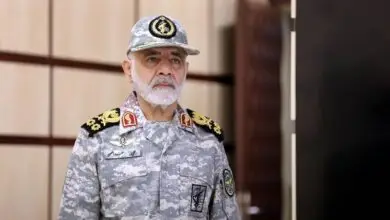
The Islamic Revolutionary Guard Corps (IRGC) Navy’s deputy for political affairs warned that Iran would target U.S. vessels throughout the Indian Ocean if the United States launched a new war against the country.
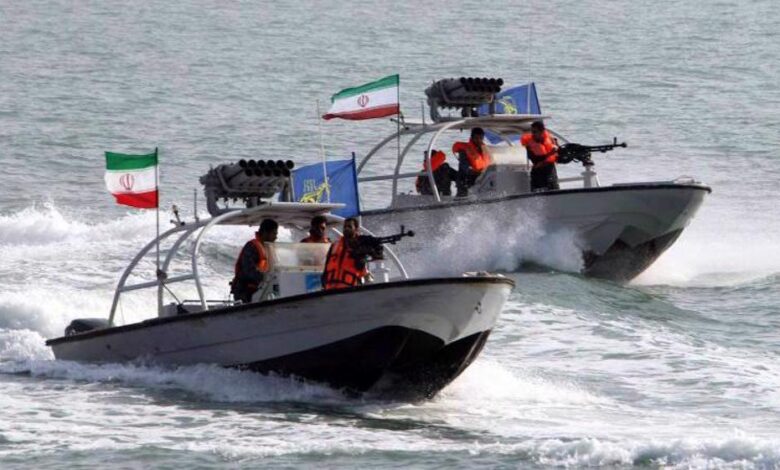
The Islamic Revolutionary Guard Corps Navy’s deputy for political affairs warned that Iran would target U.S. vessels across the Indian Ocean if Washington launched a new military offensive against the country.
Ali Mohammadi said Saturday in the southern port city of Bandar Abbas that if another war breaks out, they will attack and destroy enemy vessels and destroyers, including those in the Indian Ocean.
The remarks followed Trump’s rejection of an Iranian proposal to reopen the Strait of Hormuz for seven days. The waterway has remained under Iran’s tight control since the early stages of what Tehran described as an illegal US-Israeli military assault.
Trump also claimed that the United States already had “total control” of the strategic waterway, through which one-fifth of global oil demand passes.
Mohammadi said the IRGC Navy is monitoring vessels in the Persian Gulf, the Strait of Hormuz and the Gulf of Oman, adding that reports of oil tankers passing through the Strait do not reflect the reality.
He added that if the United States claimed control of the Strait of Hormuz, it should send one of its warships into the area.
He questioned why Trump’s warships and vessels were not present if Trump considered the Strait of Hormuz his own, responding to a Truth Social post featuring a graphic that labeled the waterway “Trump Strait.”
Meanwhile, the commander said the armed forces were ready to defend Iran’s interests, adding that they had adopted new tactics, equipment and operational methods to counter any potential hostile action.
He said developments in West Asia would reduce the military presence of foreign powers and ultimately help achieve the goal of a Persian Gulf free from hegemonic influence.
Iran restricted transit through the Strait of Hormuz in response to the criminal US-Israeli aggression that began on February 28.
On June 17, Tehran and Washington signed a Pakistan-brokered memorandum of understanding, with Article 5 assigning Iran responsibility for reopening and managing the Strait.
However, Washington sought to erode Iran’s sovereignty over the strategically vital global energy chokepoint, resumed airstrikes against Iran and imposed a naval blockade in breach of the agreement that ended the war.
The US measures, deemed unlawful, prompted Iran to announce the closure of the Strait of Hormuz to all traffic.
Mohammadi also said the United States has increasingly relied on aerial surveillance after its drones were downed and bases and radar systems in the region were targeted in Iran’s retaliatory strikes.
“Past confrontations have shown that any power engaging in hostilities against the Iranian nation has paid a heavy price,” he said.