Iran Declares Sovereignty Over War and Peace Decisions, Defies US Influence: Foreign Ministry Spokesperson
According to a statement from the Foreign Ministry spokesperson, Iran firmly rejects any notion that the United States can dictate the timing of war initiation or conclusion. The spokesperson emphasized that Iran's strategy on defense and diplomacy is exclusively driven by its national interests and security considerations.
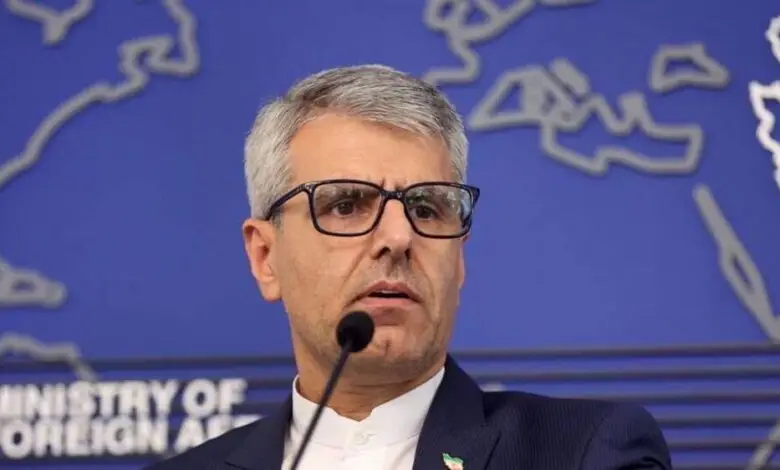
At a Monday press conference, Esmaeil Baghaei addressed inquiries about media claims stating that Iran and the United States have reacted to a shared proposal by Pakistan and Qatar aimed at establishing a ceasefire and resuming negotiations, amidst ongoing U.S. arms transfers to the region.
In addressing Iran’s decision-making process, Baghaei emphasized that the nation’s policies are formulated through established institutional mechanisms, free from external influence.
He stated that their primary focus is not on oil or American interests but rather on their own national priorities and expediency.
A representative of the Islamic Republic emphasized that determining a country’s national interests is a complex process that involves multiple considerations. According to the official, national security and interests are the guiding factors in decision-making, which is conducted through a transparent and systematic approach involving all pertinent decision-making entities.
The statement emphasizes a firm stance against external influence on national security decisions, asserting autonomy in matters of war and peace. It underlines a commitment to self-defense aligned with national interests, while also expressing openness to diplomacy when deemed beneficial for safeguarding these interests.
**Ukrainian Assault on Iranian Ship Could Lead to Severe Repercussions**
In other parts of the statement, the spokesperson vehemently criticized a recent lethal Ukrainian assault on an Iranian commercial vessel in the Caspian Sea, asserting that the act of aggression occurred despite the Islamic Republic’s absence of any involvement in the Russia-Ukraine conflict.
The incident has been described as an “unlawful act” that will not go unpunished, he stated. He further stressed that nations identifying as allies of the Ukrainian government should also be held responsible for the latest events.
A spokesperson has urged restraint from Ukrainian President Volodymyr Zelensky, highlighting the potential severe repercussions of recent aggressive actions. The attack was characterized as a symbolic move intended to draw global attention and underline Ukraine’s limited influence in international relations.
Highlighting the upcoming meetings between Ukrainian President Volodymyr Zelensky, Israeli Prime Minister Benjamin Netanyahu, and Trump, Baghaei expressed criticism towards the potentially harmful alignment among the three leaders.
He described the alliance as a “triangle of evil,” asserting that such formations have consistently failed to contribute positively to international peace and security.
Iran aims to establish positive diplomatic relations with its neighboring countries.
An official emphasized that Iran is not pursuing any conflict with its neighboring countries. “We harbor no animosity towards any of them. In fact, there are significant connections and mutual interests shared between Iran and the nations along the southern coasts of the Persian Gulf.”
Certain countries in the region have reportedly permitted their territories to be utilized by groups conducting attacks against Iran. In some instances, these countries have even taken part in such operations independently. This has led to retaliatory measures by the Islamic Republic targeting American interests within those nations, he noted.
An official from the Islamic Republic has condemned the cooperation, labeling it a “war crime.” The nation expects the collaboration to be halted immediately.
Iran and Oman have engaged in constructive talks that officials say are unrelated to any dealings with the United States.
Baghaei reported progress in the ongoing bilateral negotiations between Iran and Oman, noting that multiple rounds of discussions conducted over Friday and Saturday had been “useful and constructive.”
He stated that discussions are focused on managing maritime traffic through the Strait of Hormuz, with the objective of establishing protocols to guarantee safe navigation while upholding the sovereign rights of the two bordering nations.
Baghaei highlighted that the discussions are solely between the two parties involved.
The ongoing negotiations between Iran and Oman are strictly bilateral and do not involve the United States in any capacity. The discussions between the two nations are continuing independently of any external influence.