Panetta: US War on Iran Could Become ‘Another Failed’ Aggression in West Asia
Former Pentagon chief Leon Panetta has warned that Washington’s military campaign against Iran risks becoming another failed US intervention in West Asia, like the wars in Iraq and Afghanistan. He said the United States had been unable to break the impasse, leading adversaries to increasingly view Washington as weak.
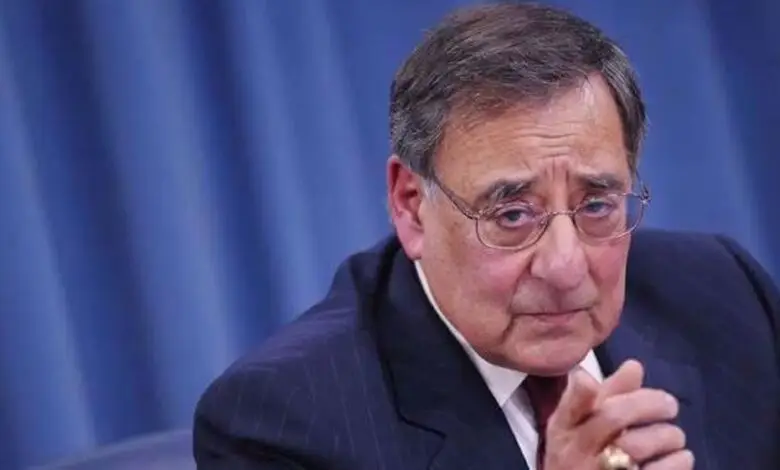
Former Pentagon chief Leon Panetta warned that Washington’s conflict with Iran could develop into another failed US military intervention in West Asia, echoing the wars in Iraq and Afghanistan. He said the United States has been unable to break the deadlock, while its adversaries increasingly view it as weak.
Panetta said Washington’s failure to end the war, coupled with turmoil at the Pentagon and within its chain of command, is eroding US credibility and fueling doubts about its ability to wield military power effectively.
In an interview with the Guardian, Panetta said the war launched by Trump against Iran more than six months ago risked becoming another “forever war” in the region, with no clear end in sight.
Panetta, a former CIA director who served under President Barack Obama, said the United States and Iran remain locked in a damaging stalemate with few viable paths to end the war. He warned that the conflict could become “another failed war” in West Asia, similar to Iraq and Afghanistan.
He said he believed the war was likely to continue for another six months without a resolution.
Panetta’s warning comes as Washington faces mounting questions about its ability to sustain the war. He spoke days after US Army Secretary Dan Driscoll abruptly resigned amid reports of tensions with Pentagon chief Pete Hegseth over a series of dismissals.
Former Pentagon chief Leon Panetta, who served from 2011 to 2013, said US troops were being sent into combat amid significant turmoil at the department and within its command structure, creating the impression that no one was in control.
He said Iran and other adversaries may now perceive weakness in the United States’ ability to deploy its military capabilities to defend the country.
Panetta said he was especially concerned that the United States was projecting weakness to its principal adversaries amid rising global tensions.
He said his main concern was the increasingly dangerous global security environment, citing threats from China, Russia, North Korea and Iran. He also warned that the United States was sending a message of weakness to its main adversaries.
The speaker said the countries involved in the emerging alliance continued to meet and support one another, viewing the United States as particularly weak. They warned that the perception sends a dangerous message amid the threats facing the country.
In March, three weeks after the United States and Israel launched their war against Iran, Panetta told The Guardian that Trump appeared caught between a “rock and a hard place” as he considered whether to widen the conflict or “simply walk away and declare victory,” despite the risk of being seen as having failed.
Earlier this week, Panetta said he “absolutely” believes Trump remains in that position, adding that Trump has “boxed himself in.”
The former Pentagon chief outlined three possible options for Trump.
The first option, he said, would be to withdraw from the war and acknowledge that it had failed.
The second scenario would see the current stalemate continue, marked by intermittent tit-for-tat attacks, as both sides seek to prevent a broader and more dangerous conflict while rejecting negotiations or capitulation.
Panetta warned that the approach could lead to what all parties feared: another prolonged war in West Asia.
He said the third option would involve the United States making clear that its immediate priority was reopening the Strait of Hormuz.
Panetta said Trump had undermined his own credibility by repeatedly claiming that a deal to end the war was near and that the strategic waterway remained open.
Panetta said the key question was whether he would follow through, adding that he currently faced a difficult situation because he lacked credibility and his threats were being ignored.
Earlier this week, U.S. Vice President JD Vance told reporters he would not characterize the ongoing U.S. military action against Iran as a “war.”
Asked whether he expected the war to end by the November U.S. midterm elections, Vance said he did not know and that the question should be directed to Iran.
Panetta said many Americans have lost confidence in Trump’s ability to manage the war, citing polls he said show that most Americans view the conflict with Iran as a mistake and oppose continuing it.
The former Pentagon chief also highlighted the USS Abraham Lincoln’s record deployment. The carrier recently arrived in Thailand after spending more than 260 days supporting U.S. military operations against Iran without a port visit, amid reports of deteriorating living conditions and mental-health concerns among its crew.
Panetta said personnel should not be deployed indefinitely to a war zone without plans for rotation.
He said the war’s setbacks had been compounded by a lack of confidence in the military’s support for service members risking their lives.
The United States and Israel launched what was described as an illegal war against Iran on February 28. Forty days later, on April 8, the two sides agreed to a ceasefire amid Iranian resistance and retaliatory operations.
On June 17, Tehran and Washington signed the 14-point Islamabad memorandum of understanding, which called for an end to hostilities, the reopening of the Strait of Hormuz and additional negotiations aimed at reaching a final agreement.
However, the US later sought to undermine Iran’s sovereignty by establishing an unsafe corridor near Oman’s shores.
The US measure prompted Iran to announce the reimposition of restrictions on the Strait of Hormuz. Tehran said all passage through the strategic waterway must be coordinated under Iranian arrangements in line with the agreement.