Rashida Tlaib Urges Senate to Block Trump’s $5 Billion Saudi Arms Sale, Citing Yemen Siege
US Representative Rashida Tlaib criticized the Trump administration’s latest arms package for Saudi Arabia, calling it a continuation of more than a decade of US-backed bombing, blockade and starvation affecting Yemenis.
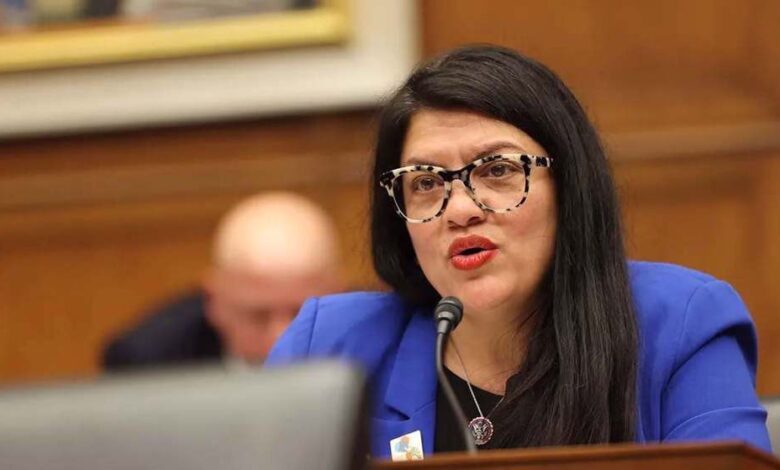
US Representative Rashida Tlaib condemned Trump’s latest arms package for Saudi Arabia, describing it as a continuation of more than a decade of US-backed bombing, blockade and starvation targeting Yemen’s people.
A Michigan Democrat said Thursday on X that, with U.S. support, Saudi Arabia had bombed, blockaded and starved Yemenis for more than a decade. The lawmaker criticized the Trump administration’s planned $5 billion arms sale to Saudi Arabia, including 2,000-pound bombs, and urged the Senate to block the deal.
The proposed sale, notified to Congress earlier this month, includes more than 10,000 Joint Direct Attack Munition (JDAM) guidance kits and compatible bomb bodies. The package includes 5,000 BLU-117 munitions weighing 2,000 pounds, weapons that have repeatedly been used against civilian infrastructure in Yemen. Boeing is named as the principal contractor.
Tlaib’s statement comes as Yemeni forces report significant battlefield gains against Saudi-backed militias, highlighting what critics describe as the failure of years of U.S.-backed airstrikes to produce a political settlement. Washington has declined to join Riyadh in new direct strikes following reported secret talks with Yemeni representatives in Oman, while accelerating shipments of precision-guided bombs to Saudi Arabia, which has faced widespread criticism over its yearslong campaign and blockade in Yemen.
A Decade of Aggression Backed by the United States
Since 2015, the Saudi-led coalition, backed by U.S. arms, refueling support and diplomatic protection, has carried out tens of thousands of airstrikes and imposed naval and air restrictions on Yemen. The conflict contributed to what the United Nations described for years as the world’s worst humanitarian crisis. Hospitals, schools, markets, water-treatment facilities and funeral gatherings were among sites repeatedly hit. Millions of Yemenis, including children, have faced famine, cholera and other preventable diseases, while Western arms manufacturers reported record profits.
The 2,000-pound bombs being offered again are the same type of weapon that rights groups say have destroyed entire city blocks and caused indiscriminate deaths. Progressive members of Congress have repeatedly argued that approving the sales makes the United States a co-belligerent in the war.
US accused of complicity in war against Yemen
Tlaib is not alone. Representative Ro Khanna of California, a co-sponsor of historic War Powers resolutions seeking to end U.S. involvement in the Yemen war, has repeatedly argued that no president, regardless of party, has the constitutional authority to wage or facilitate such a campaign without congressional approval. In 2025, Khanna condemned renewed U.S. bombing in Yemen as a betrayal of campaign promises to end endless wars.
Sen. Bernie Sanders of Vermont has for years said U.S. logistical support, intelligence sharing and spare-parts transfers make the country “complicit in this nightmare.” Sanders, Rep. Ro Khanna and other lawmakers previously pushed votes to halt maintenance and munitions for Saudi Arabia’s air force, but successive administrations vetoed or weakened those efforts.
Representatives Pramila Jayapal, Val Hoyle and others have called on the Trump White House to halt unauthorized strikes and consult Congress. Senators Jeff Merkley, Chris Van Hollen, Tim Kaine and others have sent letters stating that any prolonged military engagement with Yemeni forces must comply with the Constitution and the War Powers Resolution.
Senator Ed Markey has introduced a resolution opposing the latest bomb sale, giving the Senate a formal mechanism to act on Tlaib’s call.
Anti-war organizations have been even more direct. CODEPINK, Veterans for Peace, the ANSWER Coalition and dozens of other groups have spent years documenting how U.S. bombs and the Saudi blockade contributed to Yemen’s humanitarian crisis.
They have staged protests under the slogan “Let Yemen Live,” demonstrated outside weapons manufacturers and urged lawmakers to halt the supply of munitions used in attacks on one of the world’s poorest countries. Activists have long maintained that Yemen’s resistance to the siege amounts to legitimate self-defense and an expression of solidarity.
The Ansarullah movement has repeatedly asserted that it prioritizes Yemeni sovereignty and public sentiment. Its latest gains, along with reported successes in targeting Saudi aircraft, indicate that years of intensive airstrikes have not diminished the determination of many Yemenis to resist foreign influence.