Iran’s Military Capabilities Leave US in a Quandary, Former British Commander Says
Iran’s expanding military capabilities and capacity to inflict significant damage on US and Israeli targets have left Washington facing a strategic dilemma, according to a retired British naval commander.
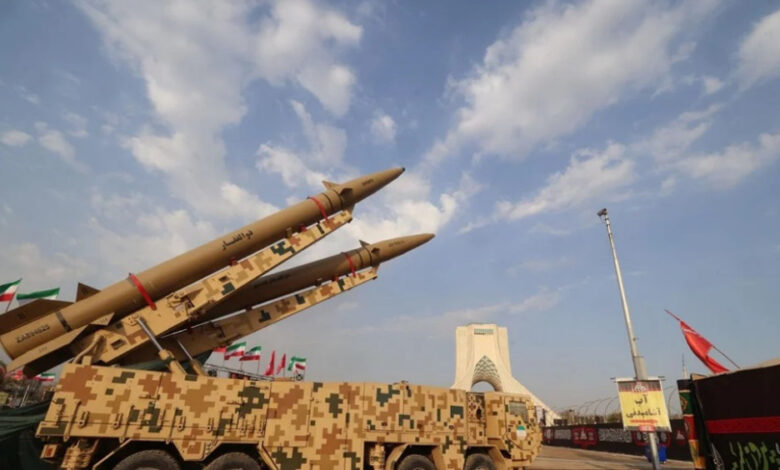
Iran’s expanding military capabilities and capacity to cause significant damage to US and Israeli targets have left Washington facing a strategic dilemma, a retired British naval commander said.
The article is based on an episode of Press TV’s *Unscripted*, hosted by Kaveh Taghvai and featuring Steve Jermy, a retired Royal Navy commodore, former naval commander, offshore energy executive and strategic strategist.
The United States has approximately 50,000 troops stationed in West Asia. An additional 10,000 personnel have reportedly been deployed as part of the Theodore Roosevelt Carrier Group, bringing the stated total to about 12,500 forces, of whom only 7,000 are considered combat-ready.
A ground operation of any kind would require significantly more troops and pose a monumental challenge for the U.S.
Jermy commanded warships in the Royal Navy’s 5th Destroyer Squadron and served with Britain’s Fleet Air Arm. He participated in the Falklands War and deployed to the Adriatic during the Bosnian and Kosovo campaigns. He retired in 2007 after serving as strategy director at the British Embassy in Afghanistan.
He is the author of *Strategy for Action: Using Force Wisely in the 21st Century*. He now works in the offshore energy sector, where he writes and advises on geopolitics, warfare, economics and energy.
In this edition, we examine U.S. and Iranian military strategies, assess whether Washington’s troop deployments and military buildup are intended as saber-rattling or preparations for an attack, and consider whether Iran’s retaliatory capabilities and missile arsenal have deterred the United States from launching an all-out war.
**Tehran talks show that excluding the U.S. is the best approach**