Iran Maintains Diplomatic Stance as U.S. Promotes Global ‘Law of the Jungle’: Araghchi.
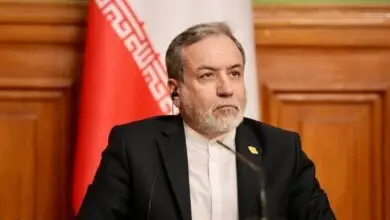
Iran's Foreign Minister Abbas Araghchi has asserted that the country remains dedicated to diplomatic efforts, despite disruptions caused by Washington in indirect negotiations. Araghchi criticized the United States for driving international relations towards a "law of the jungle" by depending on force.
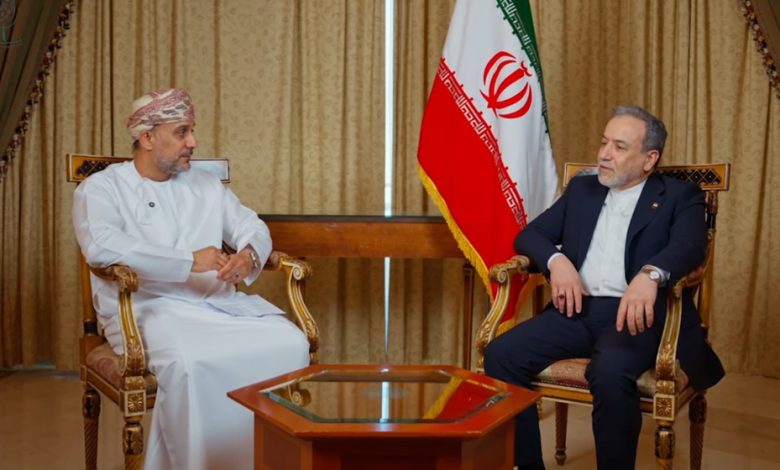
His comments were made during an appearance on the program Ma‘ Moosa Al Farei, subsequent to a significant meeting concerning mediation initiatives in Muscat.
An official stated that if the United States demonstrates a willingness to engage in a fair and balanced agreement rooted in mutual interests, the Islamic Republic of Iran is prepared to give the matter serious consideration. The official emphasized that Iran has consistently remained engaged in diplomatic discussions, underscoring that diplomacy is a fundamental aspect of its policy and principles.
In light of his recent visit to Muscat and the meetings conducted there, the Iranian Foreign Minister commented that the central topic of discussion centered on the “unfortunate reality that international law and global systems are being increasingly swayed by the United States’ inclination to employ force in its international dealings.”
He highlighted that five rounds of indirect negotiations, facilitated by Oman earlier this year, had nearly brought the parties to an agreement. However, according to him, the United States subsequently dismissed proposed solutions, thereby deviating from the diplomatic process.
Araghchi stated that the negotiations broke down after the United States maintained its demand for “zero enrichment,” a condition he asserted that Iran could not agree to.
He emphasized that if the condition is to allow no enrichment at all, reaching an agreement would be impossible. However, if the aim is to prevent the development of bombs, a deal could be achieved.
The foreign minister has expressed concerns over the growing influence of “the law of the jungle” in global affairs, attributing this shift to US militarism. The minister argued that the principle of “peace through strength” often translates into a scenario where the stronger party prevails, rather than fostering genuine peace. True peace, the minister insists, should be attained through diplomatic efforts.
The assertion was made that the aggression targeting Iran, carried out by Israel with direct involvement from the United States, took place “amidst ongoing negotiations,” constituting an assault not just on Iran, but also on the essence of diplomacy itself and on Oman’s role as a mediator.
On June 13, Israel initiated military actions against Iran, resulting in the targeted killing of several high-ranking military officers, nuclear scientists, and civilians without prior provocation.
More than a week later, the United States commenced military action by targeting three Iranian nuclear facilities, an act widely regarded as a serious breach of the United Nations Charter, international law, and the Nuclear Non-Proliferation Treaty (NPT).
In retaliation, the Iranian Armed Forces launched strikes against strategic locations within the occupied territories and targeted the al-Udeid air base in Qatar, known as the largest American military installation in West Asia.
In the aftermath of the recent 12-day conflict with Israel, Araghchi has stated that despite Iran incurring “heavy costs,” the nation has emerged more robust. Iran utilized the conflict to test its missile systems in real combat situations and to identify vulnerabilities on both sides.
In response to inquiries about the potential for direct dialogue between Tehran and Tel Aviv, Araghchi stated that Iran “does not recognize any legitimacy for the Zionist regime.”
The occupation force “has no rightful place in this region,” he stated, further asserting that it was created by “seizing Palestinian territory” and continues through “acts of violence, killings, and genocide.”
In a statement regarding regional policy, he reiterated Iran’s backing for organizations including Lebanon’s Hezbollah, Yemen’s Ansarullah, and the Palestinian movement Hamas.
He emphasized that they are “independent actors,” further noting that Iran supports them due to its belief that they are pursuing a legitimate and sacred objective.
He stated that their struggle is aimed at liberating their land and securing freedom.
In relation to the situation in Syria, Araghchi stated that Tehran does not have official connections with the new Syrian government at present. However, Iran is keeping a close watch on the evolving circumstances.
He issued a caution regarding Israeli intentions to expand territorial control within Syria and potentially fragment the nation, describing this move as a significant threat to regional stability.
Araghchi conveyed a positive outlook regarding the relationship between Iran and Saudi Arabia, following the reconciliation facilitated by Beijing. He highlighted the consistent high-level discussions taking place between the two nations.
He asserted that the foundation of broader regional security should be the responsibility of the countries within the region, free from the involvement of foreign powers. He further suggested that enhancing mutual trust could ultimately pave the way for collaborative security frameworks in the Persian Gulf.