Great Satan US Military Installations Targeted in West Asia Amidst Tensions with Southern Iran
In the pre-dawn hours of September 2, 2026, Iran's Islamic Revolutionary Guard Corps, in concert with the Iranian Army, initiated a sequence of coordinated missile and drone assaults on United States military installations spread across Jordan, Kuwait, Bahrain, Iraq, and the United Arab Emirates. This retaliatory operation was in direct response to air strikes that targeted areas in southern Iran, resulting in significant casualties among US military personnel.
Iran carried out its latest wave of retaliation following a US military attack on a residential structure in Kouhestak, Sirik County, located in Hormozgan Province. The strike occurred during a wedding celebration, resulting in the deaths of at least five individuals, including a child, and injuring 68 others.
The United States military launched targeted strikes on a civilian airport, a fishmeal factory, and power grids in southern Iran, actions that have been widely condemned as aggressive military maneuvers.
The assaults have resurrected painful recollections of the violence imposed by the US-Israeli military actions on Iranian civilian targets in the initial stages of the American-Israeli aggression, such as the Minab school massacre and the Lamerd sports hall attack.
Iran’s military executed a rapid and coordinated assault utilizing both missile and drone technology to strike U.S. bases and resources throughout the region. The operation reportedly caused significant destruction to infrastructure, equipment, and personnel associated with these American installations.
The strikes showcased Iran’s capability to target U.S. positions well beyond the Persian Gulf, challenging the presumption that geographic distance offered safe haven for American forces.
The broader context refers to the wider circumstances, factors, or conditions that surround a particular situation or event, providing a more comprehensive understanding of its significance or implications.
A fresh wave of attacks has been reported following a period marked by increasing US breaches of the Islamabad Memorandum of Understanding (MoU), which was signed on June 17. The violations have been characterized by persistent military aggression, acts of maritime banditry, and piracy.
In recent weeks, the United States has continued its naval blockade of Iran, allegedly in violation of the Memorandum of Understanding, conducting strikes on various sites in southern Iran. In response, Tehran has targeted US military installations throughout the region and has once again closed the strategic waterway.
On Sunday night, the United States conducted a strike on Iran’s Larak Island, leading the IRGC to declare a retaliatory coordinated operation against US military sites in Jordan.
The United States Central Command (CENTCOM) announced that it conducted airstrikes in response to what it alleged were efforts by Iran’s Islamic Revolutionary Guard Corps (IRGC) to place sea mines in the Strait of Hormuz, as well as a missile attack aimed at an American military installation in Jordan. These assertions, however, have not been substantiated by evidence.
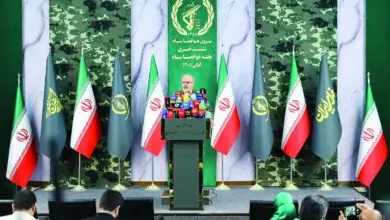
A representative for the Khatam al-Anbiya Central Headquarters announced that Iranian Armed Forces have retaliated against assaults by launching drone and missile strikes on American bases in the region. The strikes reportedly caused substantial damage to infrastructure, facilities, weapons, and equipment and resulted in numerous casualties among US commanders and troops.
He stressed that the “offensive operations targeting the Americans will persist until they reconsider their aggressive actions.”
The catalyst for the September 2 retaliatory actions was a United States missile strike, which resulted in shrapnel hitting a residential home in Kouhestak, Sirik County, amidst an ongoing wedding celebration.
The attack claimed the lives of five civilians, among them a child, and left 68 others injured. Initial reports had indicated two fatalities, but the death toll increased as further casualties were verified.
The Red Crescent Society reported that a missile strike by the United States resulted in shrapnel impacting a residential home in Kouhestak during a wedding celebration. The Iranian Health Ministry verified the casualties, including a child among the fatalities.
In other developments in Sirik, United States military forces conducted strikes on a fishing pier and a port authority tower. Additionally, a fishmeal factory located on Qeshm Island was targeted. These actions have been highlighted as clear instances of war crimes, calling into question the authenticity of America’s assertions concerning human rights.
The Iranian armed forces, comprising both the IRGC and the national Army, executed retaliatory strikes targeting several U.S. military installations situated in the region.
**Camp Titin in Jordan**
Iran’s Islamic Revolutionary Guard Corps’ Aerospace Force executed a significant ballistic missile counterattack targeting the US Marine base, Camp Titin, located in Jordan. This operation marks the second phase of the “Punishment of the Aggressor” campaign.
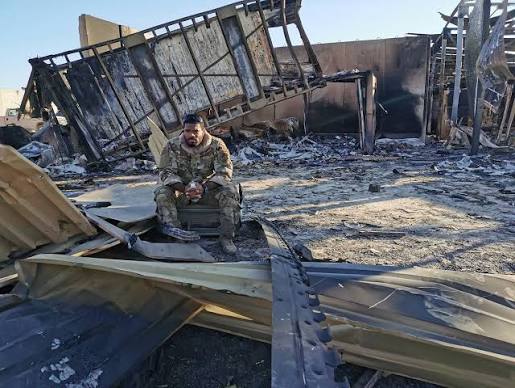
The strike resulted in significant casualties among U.S. personnel and decimated several crucial facilities and attack helicopters. Security sources verified that the Iranian assault on Camp Titin was both powerful and devastatingly accurate.
Camp Titin is situated near Aqaba, at the northern tip of the Red Sea. This location lies in proximity to Eilat port in the occupied Palestinian territories and near the border with Saudi Arabia.
The strategic location is ideally suited for U.S. Marine exercises, safeguarding maritime infrastructure, conducting amphibious operations, and ensuring the swift deployment of military equipment and personnel.
According to sources within the US Navy, the FASTCENT unit, a rapid-response Marine team, has been engaging in exercises at the camp. This activity highlights its strategic importance in supporting the operations of the US Marine Corps and facilitating swift force deployment.
Reports indicate that the United States aimed to station a segment of its military forces at Camp Titin, operating under the assumption that Iran either lacked the necessary intelligence on the deployment or would be incapable of targeting the site.
The strike on Camp Titin highlighted that geographical separation does not guarantee immunity for US military installations from Iran’s influence. Additionally, it revealed the depth of Iran’s intelligence prowess concerning the movements of American forces.
Reports have surfaced indicating that a medical evacuation helicopter was seen at a United States base in Jordan, tasked with transporting injured soldiers or personnel following an Iranian assault. This development suggests that the strikes resulted in notable casualties.
**Jordan’s Prince Hassan Base: A Strategic Military Hub**
The Islamic Revolutionary Guard Corps (IRGC) has reported executing an extensive ballistic missile attack targeting hangars at the US Prince Hassan Air Base in Jordan. The facility housed RQ-4 and MQ-9 reconnaissance and strike drones.
In the aftermath of the retaliatory strike, multiple American drones were destroyed, and there were casualties and injuries among military pilots and technical aviation staff.
The IRGC announced that numerous technical infrastructures had been ignited as part of a retaliatory action. This event was characterized as a substantial ballistic missile assault aimed at the hangars and technical facilities housing US long-range drones.
The RQ-4 Global Hawk and MQ-9 Reaper, two of the United States’ premier surveillance and attack drones, have been compromised, marking a notable setback in the nation’s reconnaissance strength in the area.
**Ali Al-Salem Air Base in Kuwait**: The Ali Al-Salem Air Base, located in Kuwait, is a significant military installation utilized by various military forces for strategic operations and defense activities in the region. The base plays a crucial role in supporting logistics, training, and operational missions, underscoring its importance in maintaining regional security and stability.
The Iranian Revolutionary Guard Corps (IRGC) has reported that its forces targeted the command compound and residential quarters of a senior U.S. commander at Ali Al-Salem Air Base in Kuwait. The attack resulted in a fire engulfing a drone hangar and deployment ramp, leading to the destruction of several drones.
Several US personnel were killed in an attack, which was subsequently met with strikes targeting a drone hangar and the ramp used for launching drones involved in assaults against Iran.
Ali Al-Salem Air Base serves as a pivotal operational center for the United States in the region, functioning as a crucial air transportation hub and a primary gateway for deploying military forces to West Asia. It is integral to Washington’s regional military and logistical strategy.
The installation hosts sophisticated radar systems, such as Patriot air defense radars, which were previously targeted by Iranian forces. The strike on the US commander’s compound marks a notable assault, aimed directly at US leadership infrastructure.
Sheikh Isa Air Base, a pivotal military installation located in Bahrain, serves as a strategic hub for air operations in the region.
The Iranian Army reported conducting drone strikes aimed at radar systems and troop positions located at the Sheikh Isa Air Base in Bahrain.
In a strategic move under Operation Thunder, Arash explosive drones targeted radar installations and assembly areas of U.S. forces.
The Army has characterized Sheikh Isa as a pivotal U.S. base in the Persian Gulf, playing a key role in the repair and maintenance of helicopter and drone components, while also serving as a base for reconnaissance aircraft.
Bahrain serves as the headquarters for the US Fifth Fleet, underscoring the strategic importance of the Sheikh Isa base.
The assaults on radar installations in Bahrain are a component of a wider initiative aimed at diminishing U.S. air defense and surveillance capabilities throughout the region. These actions follow comparable strikes on radar systems in both Kuwait and Jordan.
The Army has stated that military operations will proceed without interruption, with a comprehensive and far-reaching response to actions deemed as American transgressions.
**Al Dhafra and Al Minhad Military Installations in the UAE**
The Iranian Army has declared the initiation of numerous explosive-drone attacks targeting radar systems and troop positions at the Al Dhafra and Al Minhad bases in the United Arab Emirates. These actions are part of the 30th stage of Operation Thunder.
Al Dhafra Air Base is recognized as a key operational hub for the United States in the region, serving crucial roles in air operations, intelligence gathering, surveillance, and logistics support.
The base, hosting a substantial presence of US military personnel, has become a focal point as attacks suggest an expansion of the conflict, now encompassing Gulf states housing American forces.
The Al Minhad base plays a crucial role as a logistics hub, facilitating the support and transportation of foreign military forces.
The Iranian Army announced that it launched a series of drone assaults targeting the positions of helicopters and U.S. military forces at the base.
The UAE Ministry of Defence has announced that national air defense units have intercepted unmanned aerial vehicles over the country’s territorial waters. These drones were reportedly approaching from the direction of Iran, highlighting the seriousness of the strikes.
**Erbil’s Maintenance Facilities and Fuel Depots in Iraq**
Iranian forces executed a coordinated assault involving missiles and drones on American facilities located in Erbil, within Iraqi Kurdistan. The strike specifically targeted a repair center, a warehouse for technical equipment, a spy balloon guidance system, and fuel tanks.
The military strikes led to the obliteration of the repair facility, storage warehouses, and a balloon system, igniting fuel tanks and resulting in several troop fatalities.
The strikes in Erbil underscore Iran’s capability to simultaneously target US positions across various regions, effectively coordinating attacks on bases in Jordan, Kuwait, Bahrain, the UAE, and Iraq within a singular operational timeframe.