Iran Destroys 11 U.S. Aircraft and Helicopters at Regional Bases Over Two Weeks: IRGC Reports
The Islamic Revolutionary Guard Corps (IRGC) has announced that its forces have eliminated at least 11 U.S. military aircraft and helicopters stationed at American bases throughout the region over a fortnight of exchanges with the United States.
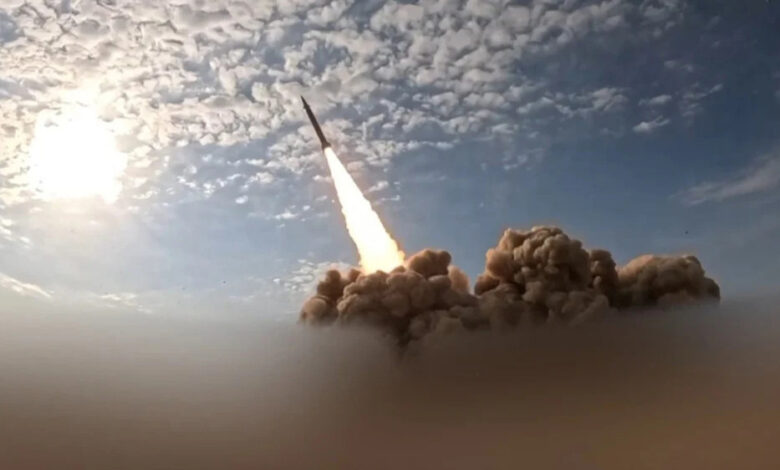
In a statement to Tasnim news agency, IRGC spokesman Brigadier General Mohsen Mohebi announced that strikes conducted from July 8 to July 22 resulted in the destruction of an F-15 fighter jet, a P-8 maritime patrol aircraft, a C-17 transport aircraft, along with eight aerial refueling aircraft.
He reported that a minimum of 17 reconnaissance and combat drones were neutralized, including eight that were brand new and still in their original packaging.
Mohebi reported that the equipment was eliminated in response to the United States’ renewed acts of aggression, as part of Iran’s military reaction.
Numerous American radar and air defense systems have been decimated throughout the region.
An IRGC spokesman has stated that recent Iranian strikes were directed at a total of seven U.S. command and control centers, three satellite communication systems, and six Patriot air defense radar systems.
The official stated that the IRGC successfully neutralized an array of military technology, including three air and naval surveillance radars, eight early warning detection radar systems, seven air defense missile radars, five long-range radars, and two air defense radars. Furthermore, a tactical radar array was dismantled, along with the disabling of three EPS radar systems and two EPS 117 radars.
General Mohebi stated that Iranian forces have strategically targeted American logistics and support infrastructure to diminish the operational capacity of the United States throughout the region.
According to a spokesperson for the IRGC, the strikes successfully targeted and destroyed six facilities designated for the repair of fighter jets and helicopters, in addition to impacting three logistics and support hubs and demolishing 12 fuel depots.
In a significant operation, seventeen storage facilities housing weapons and spare parts for both maritime and aerial equipment were targeted and struck, in addition to six missile depots.
The spokesperson for the Islamic Revolutionary Guard Corps (IRGC) presented a comprehensive report on the American operational sites that were decimated during a two-week series of retaliatory strikes carried out by Iranian forces.
The strike impacted several key infrastructures, including six hangars housing MQ-9 drones, a specialized bay for the preparation of F-15 fighter jets, and another hangar containing eight newly acquired unmanned aerial vehicles. Additionally, a hangar accommodating a P-8 aircraft was obliterated.
Iranian military forces have reportedly targeted a range of U.S.-supplied military assets, according to statements from Mohebi. The targets included four HIMARS missile platforms, six other missile launch platforms, and four Patriot defense systems. Additionally, the strikes impacted five hangars and four shelters for fighter jets, as well as six flight and parking aprons.
The strikes additionally focused on two command centers, an aircraft carrier refueling platform, a fuel pumping station, and a fuel pier, as reported by the IRGC spokesperson.
Iranian forces have reportedly dismantled an artificial intelligence data processing center associated with Amazon, a major global technology corporation, according to statements by General Mohebi.
According to a spokesperson for the IRGC, the strike additionally targeted and destroyed two signal communications centers, an intelligence data hub, and a repository for remotely-operated vessels.
The United States has recommenced military operations targeting Iran, following the withdrawal from the Pakistan-mediated Islamabad Memorandum of Understanding. These actions are reportedly intended to safeguard the freedom of navigation through the Strait of Hormuz, after Tehran increased its oversight of this crucial maritime passage.
U.S. forces conducted nocturnal strikes, aiming at civilian infrastructure such as telecommunications facilities, bridges, and water desalination plants. The attacks resulted in 55 fatalities and left 645 individuals injured.
Iran launched multiple drone and missile attacks targeting US military sites throughout the region. On Friday, the Islamic Revolutionary Guard Corps announced that the 27th phase of Operation Nasr-2 struck US locations in both Kuwait and Bahrain. The strikes reportedly resulted in the destruction of an ammunition depot, several accommodation hangars at the US-run Ali Al Salem Air Base in Kuwait, and caused casualties among American personnel.
According to figures released by the Pentagon, nearly 100 U.S. service members have sustained injuries in the past two weeks. Additionally, the U.S. military has confirmed the deaths of 18 American troops since the conflict commenced in late February, though the complete extent of U.S. casualties is still uncertain.
Reports have surfaced indicating that the US military is currently facing challenges with reduced stockpiles of air-defense interceptors and long-range precision munitions. This has sparked concerns regarding its capacity to maintain an extended campaign against Iran.