Two Invader US Navy Ships Collide Near South America Amid Trump Military Expansion
In a development highlighting the expanding military presence of the United States in the South American region, two US Navy vessels have collided during a refueling operation, resulting in injuries to two personnel.
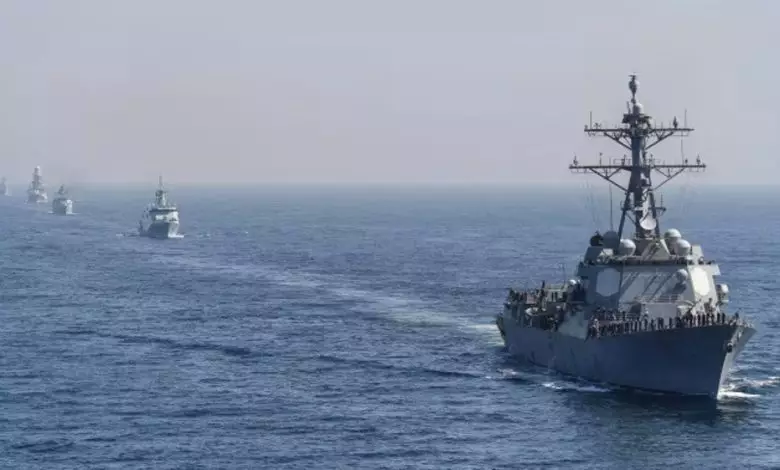
The Wall Street Journal reported on Thursday that the Arleigh Burke-class destroyer USS Truxtun and the fast combat support ship USNS Supply were involved in a collision during a ship-to-ship refueling operation on Wednesday.
According to the report, two individuals sustained minor injuries and are currently in stable condition.
The precise site of the incident remains undisclosed; however, a US military representative has verified that it occurred within the jurisdiction of the Southern Command, encompassing the Caribbean as well as sections of the South Atlantic and South Pacific.
The USS Truxtun set sail from Norfolk, Virginia, on February 6 for its planned deployment. Meanwhile, the Navy-owned vessel Supply, staffed mainly by civilian mariners, has been conducting operations in the Caribbean.
The incident occurs in the context of Trump’s significant naval expansion in the Caribbean, initiated in recent months as part of his campaign against what he alleged to be trafficking activities.
Twelve warships, including the aircraft carrier USS Gerald R. Ford and its accompanying strike group, are presently deployed within the Southern Command.
Previous incidents have highlighted significant risks and brought systemic shortcomings to light. In 2017, two distinct destroyer collisions in the Pacific resulted in the deaths of 17 sailors—the USS Fitzgerald near Japan and the USS John S. McCain close to Singapore. Subsequent investigations determined that both incidents were preventable and attributed the accidents to crew failures, culminating in the dismissal of multiple senior officials.
In a recent incident on February 12 of the previous year, the USS Harry S. Truman, an aircraft carrier, was involved in a collision with a merchant vessel in the vicinity of Port Said, Egypt. Fortunately, there were no injuries reported as a result of the collision.
Since the middle of 2025, the Trump administration has directed what observers label as the most significant U.S. military expansion in the Caribbean and South American areas in decades. This buildup encompasses warships, aircraft, submarines, and targeted strikes near Venezuela.
The White House defends this military stance as a necessary measure in the battle against drug trafficking. However, analysts and regional leaders interpret it as an assertive demonstration of military power extending into South American waters.
Earlier this year, tensions reached a peak as U.S. military forces initiated an operation involving airstrikes on Venezuelan soil, followed by an invasion that led to the capture and removal of Nicolás Maduro and his spouse.
Trump publicly declared that the United States would essentially take temporary control of Venezuela until a transition can be established, indicating a degree of intervention that surpasses typical political pressure or sanctions.
In a controversial military initiative known as Operation Southern Spear, U.S. forces are launching assaults on ships purportedly associated with narco-trafficking activities. These operations, frequently conducted without corroborating independent evidence, have resulted in multiple fatalities and have ignited a wave of legal disputes alongside allegations of unlawful military conduct during peacetime.
The administration is issuing cautions to other South American nations concerning external influences, citing China’s investments in Peruvian ports as an example. This move is part of a wider initiative aimed at strengthening Western Hemisphere security, highlighting another dimension of geopolitical competition in line with Trump’s doctrine.
Leaders from various South American nations, including Brazil and Venezuela, have voiced their concerns over the increased presence of the US military in the region. They caution that this expansion could potentially destabilize the area and rekindle tensions reminiscent of the Cold War era. Critics both domestically within the United States and internationally contend that Trump’s measures are tantamount to foreign intervention and pose a threat to national sovereignty.