IRGC Declares Strait of Hormuz Closed Amid Ongoing US Threats and Interference
The Islamic Revolution Guards Corps (IRGC) has announced that the Strait of Hormuz will remain closed in response to ongoing threats and interference from the United States in the region.
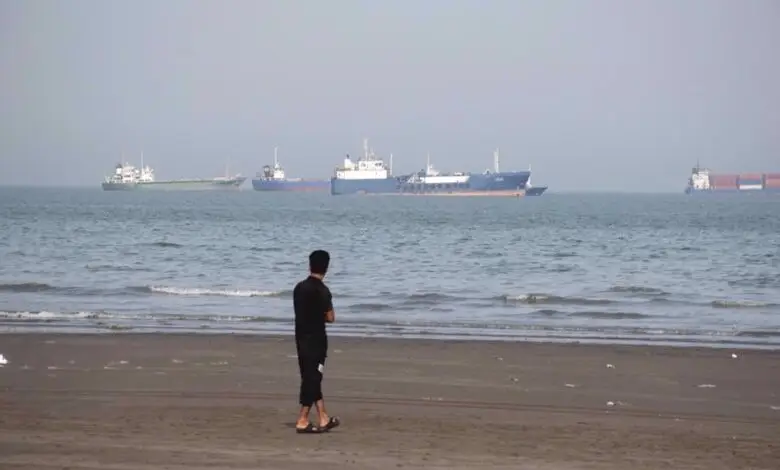
In a Thursday statement, the Islamic Revolutionary Guard Corps (IRGC) reported that two oil tankers attempted to exit the “unsafe southern route” of the Strait of Hormuz on Tuesday night, allegedly under the direction of US aircraft.
Reports indicate that one of the tankers ignited in flames, leading both vessels to rapidly alter their course.
The statement asserted that the Strait of Hormuz is under the control of the IRGC Navy, emphasizing that no foreign entities will be permitted to intervene in the area.
The statement further emphasized, “With the aid of Almighty God, retribution will be exacted upon the aggressor today.”
The Islamic Revolutionary Guard Corps (IRGC) issued a stern warning to nations it accused of supporting the aggressor, cautioning them of potential repercussions should they fail to alter their behavior.
Countries providing support to the aggressor will face severe consequences unless they amend their actions, according to the statement.
The Islamic Revolutionary Guard Corps (IRGC) announced that the Strait of Hormuz will remain closed as long as the United States continues its aggressive rhetoric and interference in maritime operations in the area, asserting that such threats and interventions exacerbate and complicate the situation.
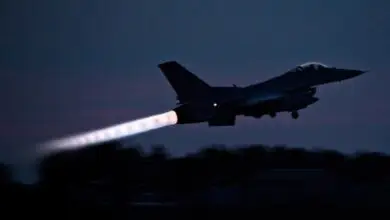
In a new development, US Central Command (CENTCOM) launched a series of strikes on Iran late Thursday night, marking another wave of hostilities. These overnight attacks targeted multiple cities, one of the most tragic being on Qeshm Island, where a two-year-old child and their parents were reportedly killed as their home came under attack.
The United States has engaged in military actions against Iran starting in early July, following what was perceived as a breach by Washington of the Islamabad Memorandum of Understanding. This agreement was intended to permanently halt hostilities initiated by the US and Israel against Iran in late February.
The agreement acknowledges Iran’s rights and sovereignty over the Strait of Hormuz, affirming its role in lifting restrictions imposed on vessels linked to aggressors and their allies since the onset of hostility. In contrast, the US sought to challenge Iran’s sovereignty by creating a precarious passageway near Omani waters.
The United States’ unauthorized action has elicited a strong countermeasure from Iran, as the nation has decided to reinstate restrictions on the Strait of Hormuz. Tehran has declared that all movements within this vital maritime passage must adhere to Iranian protocols, in accordance with their standing agreement.
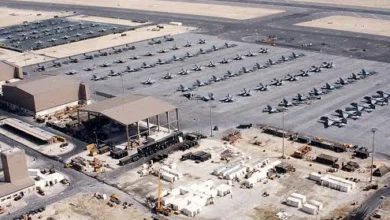
The United States’ assaults on southern Iranian provinces have prompted a robust counteraction from Iran, as its military forces, including the Iranian Army and the Islamic Revolutionary Guard Corps (IRGC), initiate multiple phases of Operation Nasr 2 and Operation Sa’eqeh, also known as Lightning. These operations have targeted US-operated bases across the region, striking locations in Kuwait, Bahrain, Jordan, and the Iraqi Kurdistan region, among others.