Iran Expresses Willingness for Dialogue Grounded in Principles and Rationality, Says Chief Justice
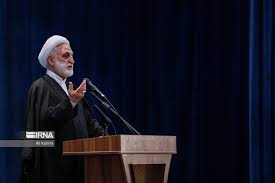
During a session on Monday of the Supreme Council of Judiciary, Ejei elaborated on Iran’s current situation, highlighting the unsuccessful objectives of adversaries both in the “field” and “diplomacy” following 40 days of what he described as a US-Israeli war of aggression.
The chief justice remarked that the Americans, displaying their characteristic arrogance and haughtiness, adhered to their standard negotiation strategy of imposing inaccurate claims. They participated in the talks mediated by Pakistan in Islamabad on April 11, attempting to secure at the negotiation table what they were unable to achieve during the 40-day conflict.
In a statement, it was noted that the Iranian delegation, under the leadership of Parliament Speaker Mohammad Baqer Qalibaf, skillfully advocated for the rightful interests of Iran and its accomplishments on the battlefield. The delegation successfully countered the demands of the Americans, who were characterized as greedy and arrogant, mirroring their defeat in a recent 40-day conflict.
Ejei stated that Iran remains prepared to engage in negotiations and foster mutual understanding, but emphasized that such dialogue must be grounded in principles and logic.
The head of the judiciary emphasized that ensuring the preservation and protection of the successes achieved during the third defensive conflict remains a top priority for all citizens. This commitment spans across diplomats, members of the executive, judiciary and legislative branches, along with diverse segments of Iranian society representing a range of ideas and viewpoints.
He emphasized that every Iranian is a guardian of the rights and accomplishments of the battlefield and its courageous military personnel.
Stressing the significance of upholding national unity, Ejei emphasized that the Iranian populace continues to stand united and cohesive, adhering to the guidance of Leader of the Islamic Revolution Ayatollah Seyed Mojtaba Khamenei. The nation is actively engaged in offering full support to the Armed Forces.
He also issued a warning about Iran’s military readiness, stating that their forces remain on high alert with their fingers on the trigger. He emphasized that despite the temporary ceasefire, there has been no reduction in vigilance or activity among the dedicated military personnel.
On February 28, after the assassination of Ayatollah Seyed Ali Khamenei and several military leaders, the United States and Israel launched an extensive military offensive against Iran. In retaliation, the Iranian Armed Forces conducted a series of counterattacks over 40 days, striking American and Israeli military sites in the region to showcase their military strength. Despite anticipations of a quick victory, Iran’s retaliatory strikes inflicted significant damage on US and Israeli assets, thereby extending the conflict and increasing regional tensions.
Efforts to de-escalate tensions saw the establishment of a two-week ceasefire on April 8, facilitating mediated negotiations in Islamabad. During these discussions, Iran proposed a ten-point plan, advocating for the removal of US troops, the lifting of sanctions, and control over the strategic Strait of Hormuz. Despite enduring 21 hours of rigorous talks with US representatives in Pakistan, the Iranian delegation returned to Tehran without coming to an accord, attributing the stalemate to issues of trust and perceived inconsistencies in US policy.